

An entryway has to absorb an unreasonable amount of daily life. Shoes arrive wet, bags land wherever gravity wins, keys disappear under mail, and the one coat needed tomorrow settles at the back of a crowded hook. A custom mudroom would be pleasant, but it is not the only way to make the area work.
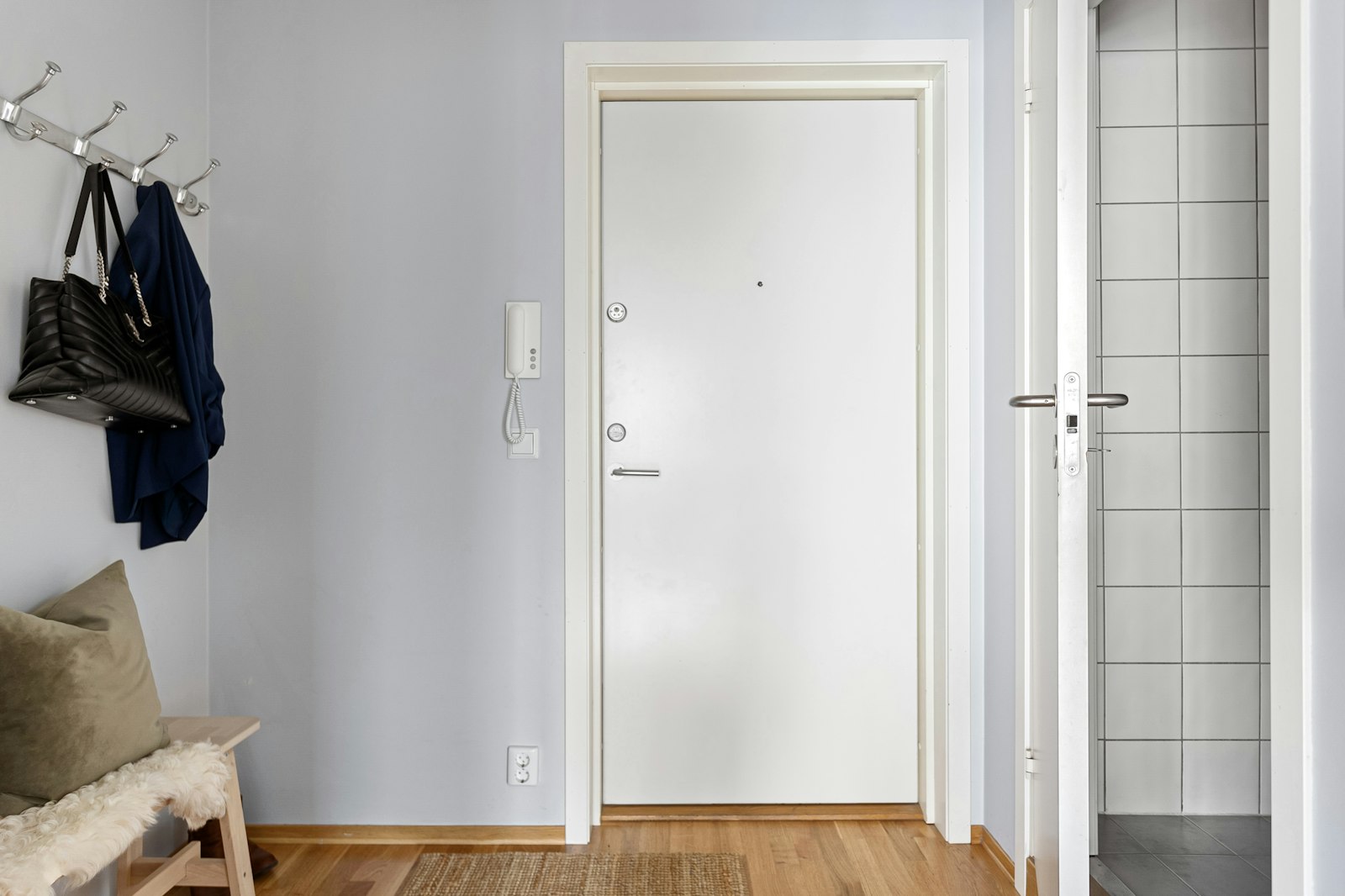
A useful weekend reset is less about adding storage than deciding what the entrance should hold. With a measured plan, a few freestanding pieces, and properly installed hooks, even a shallow wall or awkward apartment corner can become a reliable landing zone. The goal is not a photograph with nothing in it. The goal is a space that is easy to reset on an ordinary evening.
Observe the mess before moving it
For several days, pay attention to what actually enters and leaves through the door. Make a short list: daily shoes, seasonal outerwear, work bags, dog leads, umbrellas, keys, outgoing returns, children's school items, and mail. Note where each object naturally gets dropped.
Do not design storage for every coat or pair of shoes owned. The entry should support the active rotation; off-season and occasional items belong elsewhere. Reducing the inventory at the door often creates more improvement than buying a larger organizer.
Look at traffic too. Which way does the door swing? Where do two people collide? Is there a floor vent, electrical outlet, thermostat, or radiator to keep clear? A walkway should not narrow because a cabinet door or basket is open. Take photographs from both directions and write down the tightest usable depth.
Empty, sort, and clean
Remove everything that is not fixed. Sort it into four groups: used almost daily, used weekly, belongs elsewhere, and no longer needed. Return only the first two groups after the new layout is ready. Put donations and rubbish into bags immediately so they do not become a new hallway pile.
Vacuum along baseboards and beneath furniture, wipe the door and switch plate, and clean the floor using the appropriate method for its finish. Check for moisture damage near the threshold. Persistent dampness, loose flooring, or a leaking exterior door needs repair before decorative work.
This is also a good moment to tighten an existing knob, replace dead batteries in a nearby alarm as directed by its manufacturer, and confirm that furniture will not obstruct an exit. Keep the entrance usable throughout the project; tools and boxes should not block the door.
Build four simple zones
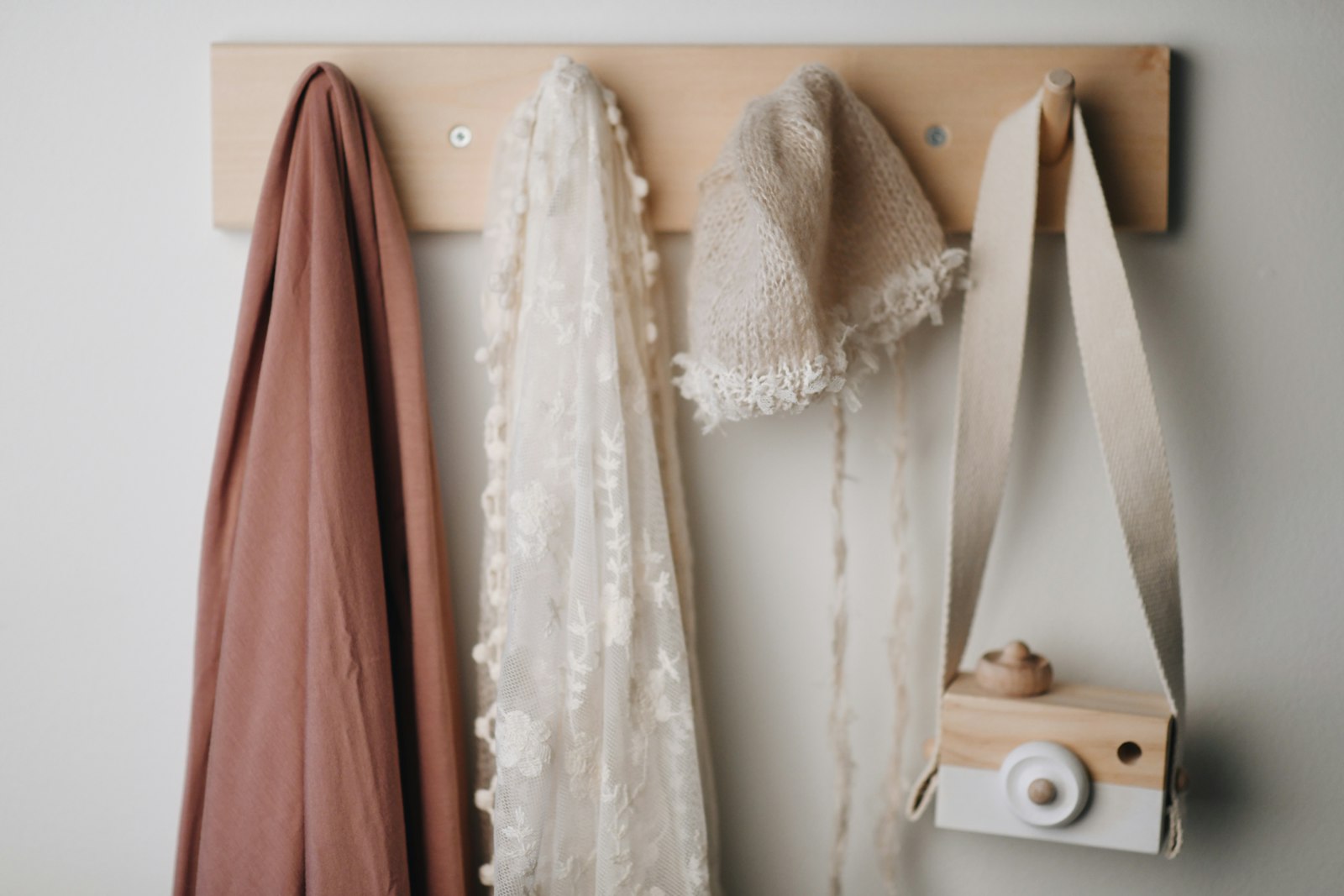
Most functional entries can be organized into four zones: drop, hang, sit, and contain. A tiny space may combine them, but naming the jobs prevents one attractive piece of furniture from being expected to solve everything.
The drop zone holds keys, a wallet, and perhaps outgoing mail. It can be a shallow tray on a console, a small wall shelf, or a lidded box. Keep it close to the door and deliberately small. A broad surface invites unrelated items to accumulate.
The hanging zone holds only current outerwear and bags. Hooks are faster than hangers and easier for children, but they need enough spacing to prevent one overloaded clump. The sitting zone may be a bench, stool, or sturdy chair used to put on shoes. The containment zone handles shoes, umbrellas, hats, and small accessories with trays or baskets.
Choose pieces by depth
In a narrow entry, depth is often the decisive dimension. Standard cabinets and benches can protrude too far even when their width fits. Use painter's tape to mark the footprint and walk past it while wearing a coat or carrying groceries. Open the front door fully.
A slim console can provide a drop surface but may offer little real storage. A bench with an open lower shelf allows damp shoes to air and makes the floor easy to clean. Closed shoe cabinets create a calmer appearance, although shoes should be dry before being enclosed. Baskets are forgiving but need labels or a clear household rule to avoid becoming miscellaneous bins.
Freestanding furniture should be stable on the actual floor. Tall or narrow pieces may need anchoring to reduce tip risk; follow the manufacturer's instructions and use fasteners appropriate for the wall. Never assume a heavy cabinet is too heavy to tip, especially in a home with children.
Install hooks safely and at useful heights
Before drilling, identify the wall type and check for wiring, plumbing, and other hazards. A basic electronic detector can help locate studs, though readings should be interpreted cautiously. If you are unsure what is inside the wall, stop and seek qualified help.
Fastening into a stud is often the strongest option. Where that is not possible, use an anchor specifically rated for the wall material and expected load. The load rating on a package depends on correct installation and does not justify hanging far more than the organizer itself is designed to carry. Adhesive hooks can be convenient for light objects, but paint condition, surface preparation, humidity, and removal method affect their performance.
Set adult coat hooks high enough that garments clear the floor but not so high that they are awkward. A lower row can serve children or hold bags. Space hooks with bulky winter coats in mind. Use a level, mark every hole, and confirm the arrangement with tape before drilling.
Give shoes a boundary
Shoes tend to multiply because the boundary is vague. Assign each household member a defined number of spaces or a single basket. Keep only the pairs used that week near the door and relocate the rest.
Place a washable or wipeable tray beneath wet footwear. It should have a lip but remain easy to step over. Clean it often enough that grit does not scratch the flooring. In snowy climates, a second absorbent mat inside the entrance can catch moisture, but curled edges create a trip hazard and should be corrected.
If odor is a problem, focus first on drying and airflow. Do not pack damp footwear into a closed cabinet. Wash removable insoles according to their care directions and clean the storage area rather than masking it with strong fragrance.
Improve the light
An entrance needs enough light to find keys, check clothing, and see moisture on the floor. Replace a failed bulb with the correct base and a wattage within the fixture's rating. A warm-neutral color temperature often feels welcoming while still providing useful visibility, but personal preference and adjacent rooms matter.
If there is no convenient wired fixture, a rechargeable motion light can illuminate the inside of a cabinet or a dark corner. Mount it where it will not fall onto someone and follow charging instructions. A table lamp can soften the space, provided its cord does not cross the walking path.
A mirror can bounce available light and give a final check before leaving. Secure it according to its weight and wall type; leaning a large mirror in a busy entry may be unsafe.
Make mail temporary
Paper is often the fastest route back to clutter. Give incoming mail one narrow holder and process it on a regular schedule. Recycling can go directly to the appropriate bin; important documents move to the place where household administration happens. The entry is a transfer point, not an archive.
Create a separate, visible position for items that must leave the house—a return parcel, library book, or reusable shopping bags. A single labeled basket works better than scattering reminders across the floor. Limit its size and check it before errands.
Add character after the system works
Once the practical zones are functioning, add one or two visual elements. A durable runner can define the passage, a small framed print can give a blank wall intention, and one restrained color can connect mismatched storage. Avoid filling the only open surface with decoration; the landing tray needs breathing room to remain useful.
Plants are appealing near a bright door, but temperature swings and cold drafts can be hard on them. Choose a location based on the plant's needs, not simply an empty corner. Likewise, scented candles are poor everyday entryway tools where coats and bags can brush against them.
Test the reset for a week
Use the entry normally before declaring it finished. If bags still land on the floor, the hooks may be too high, too few, or too far from the door. If shoes collect outside the cabinet, opening it may require an extra step when hands are full. If mail covers the console, the holder is too generous or the processing routine is missing.
Adjust the system instead of blaming the household. The most effective entryways make the desired action the easiest action. An open hook often beats a hanger; a tray beats a complicated drawer; a clearly limited basket beats an undefined storage bench.
A two-day sequence
On Saturday morning, observe, measure, empty, sort, and clean. In the afternoon, tape out the layout and purchase only the missing pieces. On Sunday, assemble furniture, anchor where required, install hooks, add trays and labels, then return the daily inventory. Keep receipts and packaging until the pieces have been tested in place.
The result may not resemble a custom mudroom, and it does not need to. A successful entryway lets people enter, remove what they are carrying, and find it again without blocking the door. That is a meaningful improvement for one weekend—and it can move with you when built-ins cannot.
Sources and further reading
- U.S. Consumer Product Safety Commission, Anchor It furniture safety campaign: https://www.anchorit.gov/
- U.S. Consumer Product Safety Commission, home safety education: https://www.cpsc.gov/Safety-Education