

In a compact home, the dining area often occupies the space left over after the sofa, kitchen, and walkway have made their claims. A table can fit there mathematically and still be unpleasant to use. Chairs scrape the wall, a cupboard cannot open while someone is seated, and the nearest lamp lights the counter rather than dinner.
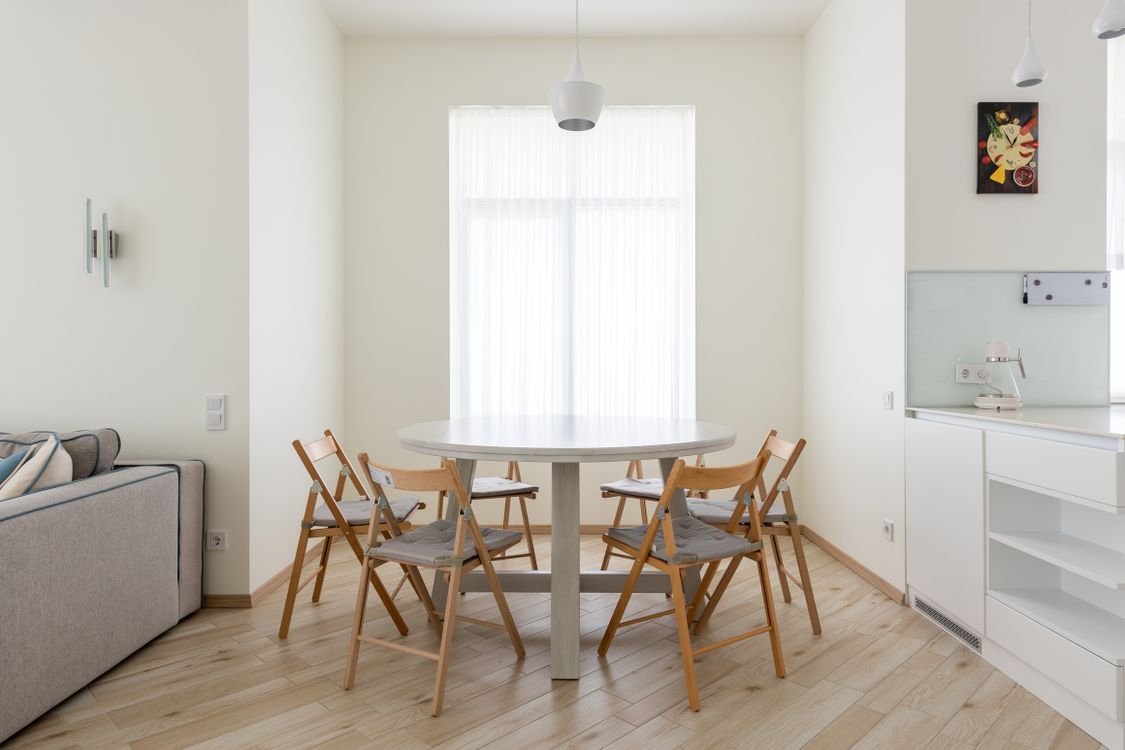
The answer is not always a smaller table. It is to give the dining area a clear boundary and fit the furniture to the way people move through it. An intentional small dining space has a place for meals, a workable path around occupied chairs, and enough light to make sitting down feel like an event rather than a compromise.
Observe a normal meal
Before buying anything, use the current space as it is. Notice how many people eat there most days, where serving dishes go, whether someone works at the table, and how often extra guests arrive. A table sized for an occasional dinner party can make every weekday breakfast awkward.
Record the route from kitchen to table and from table to other rooms. Open nearby drawers, appliances, and doors while someone sits in each chair. The dining footprint includes people and moving chairs, not only the tabletop.
Take photographs with the chairs pulled out. Catalog images almost always show them neatly tucked in, which conceals the true space requirement.
Tape the whole arrangement on the floor
Mark several table shapes with painter's tape. Add a second outline for the chairs in use. Walk the route carrying a plate or tray. If a chair must be pushed in whenever another person passes, the arrangement may be too large for daily life.
Check whether the floor is level, particularly near an old threshold. A table that rocks or a chair that catches on a rug will make the area feel improvised no matter how carefully it is styled.
Do not rely on a single universal clearance figure. A household with a wheelchair, stroller, or mobility aid needs more specific planning than a generic furniture chart can provide. The full-size test in the actual space is the useful evidence.
Choose the table shape for the room
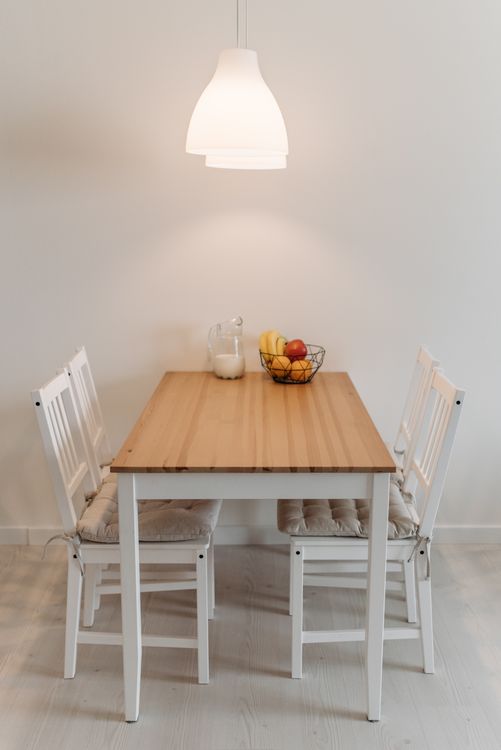
A round table can soften traffic in a square corner and allow flexible seating without sharp corners. It is not automatically the most compact choice: its diameter may protrude farther into a narrow passage than a rectangular table against a wall.
A slim rectangular table suits a long space and can sometimes be pulled out for guests. A square table feels balanced when the usable area is nearly square. Oval and rounded-corner tables preserve a useful length while easing movement at the ends.
Look beneath the top. A pedestal can give knees more freedom but needs a stable base. Corner legs may limit where chairs fit. An apron that hangs low can make a nominally suitable chair uncomfortable.
Use an extension only if it has a plan
Drop leaves and extension mechanisms are attractive in small homes. Measure the table in every configuration and decide where the extra chairs will live. A leaf that is awkward to install or blocks the kitchen when open may never be used.
Operate the mechanism before purchase if possible. Confirm the support under an extended leaf and whether the table remains stable when someone leans on the edge during ordinary use. A wall-mounted folding table requires suitable structural fixing and a clear folded position.
An occasional separate folding table may be more flexible than a large permanent table bought for rare events. Daily comfort should usually lead.
Make chairs earn their footprint
Chairs with slim backs and suitable seat height can make a small table feel less crowded. But a narrow chair is not useful if it is uncomfortable for the length of a meal. Sit in it and check the relationship with the chosen tabletop.
Armless chairs often tuck in more easily. Stackable chairs can provide extra seats if they are stable, comfortable, and have a place to be stored. A bench against a wall can reduce the area needed behind one side, but the person in the middle may need others to move to stand up.
Avoid placing a fixed bench where it blocks a window, heater, vent, or access panel. If it includes storage, check whether the lid or drawer can actually open when the table is in place.
Give the zone its own light
Lighting is one of the clearest ways to make a small dining area feel deliberate. A pendant centered over the table can mark the zone, but relocating a wired fixture requires appropriate electrical work. A plug-in pendant or floor lamp may be an option if its cord can be routed safely, away from traffic and heat.
The light should illuminate food and faces without glaring into seated eyes. Test the position at night before committing to a shade. A dimmer, if compatible, can let the table shift from homework to dinner.
If there is no room for another fixture, a nearby wall sconce or adjustable lamp can still provide a distinct pool of light. Do not make a candle the only usable evening light.
Use the wall without crowding it
A shallow shelf or small cabinet can hold napkins and serving pieces, freeing the tabletop. Measure its projection and door swing. A tall cabinet may offer more volume but make a narrow passage feel compressed; a low sideboard can leave the upper wall open.
Secure tall or tip-prone furniture according to manufacturer guidance. Heavy dishes belong low, and wall shelves need fixings appropriate to the wall and load. Do not mount a shelf directly above a seated head unless its contents and fixing are suitable.
A mirror can reflect light, but it should not reflect clutter or create distracting glare. A single piece of art may anchor the area more effectively than several small decorative signs.
Consider the rug carefully
A rug can define the dining zone in an open-plan room, but it needs to be large enough that chairs remain stable as they move. A small rug that catches chair legs makes every meal a small annoyance. In a truly tight area, leaving the floor bare may be the cleaner choice.
Choose a surface that can handle crumbs and spills according to its care instructions. A low-pile rug is often easier for chair movement than a thick plush one. Use an appropriate nonslip pad and check compatibility with the floor finish.
The rug does not need to be the visual centerpiece. Sometimes the light, table shape, and wall color already define the zone adequately.
Keep the table ready for eating
If the table doubles as a desk, give work materials one container that can move off the surface quickly. The dining area feels temporary when every meal begins by clearing a laptop, unopened mail, and chargers with no assigned destination.
Keep only a small useful centerpiece, if any. A low bowl or vase leaves sight lines open and can be moved for serving dishes. Avoid styling the table with objects that have to be relocated three times a day.
Create a nearby home for placemats, napkins, and cleaning supplies so resetting the area is easy. An intentional room is maintained by a workable routine, not by perfect behavior.
Tie it to the rest of the home
Repeat one material or color from the adjacent kitchen or living area. The table's wood tone might echo a shelf; chair upholstery might pick up a color in the sofa or art. Exact matching is unnecessary. A shared visual note helps the dining area belong to the larger room.
Differentiate it with a light, rug, wall treatment, or deliberate furniture orientation. An accent wall is not required, and painting a tiny box around the table can sometimes make the zone feel smaller.
View the arrangement from the entrance. A table positioned on an axis or a pendant that lines up with it often feels more considered than one pushed into an arbitrary leftover corner.
Spend after measuring
First move the existing table, remove unnecessary objects, and test chair placement. Then decide whether a different table or chairs are truly needed. Lighting or a shallow storage piece may solve more than a complete dining set.
Measure delivery routes and read return terms. A “small space” product can still arrive in a large package or have an awkward non-removable base. Secondhand tables are worth considering when stable and correctly sized, but inspect joints and finish before buying.
The real test is dinner
Set the table for a normal meal with the usual number of diners. Pull every chair out, serve food, and walk past. Can someone rise without moving the whole table? Is there a place for water and a serving bowl? Is the light pleasant after dark?
If the answers are yes, the dining area has earned its place. Its success is not measured by how much furniture can be fitted into the corner, but by how naturally people can sit down, eat, and continue through the room afterward.
Sources and further reading
- U.S. Consumer Product Safety Commission, Anchor It furniture safety: https://www.anchorit.gov/
- U.S. Department of Energy, household lighting choices: https://www.energy.gov/sites/default/files/2021-08/ES-EE%20Lighting_080921_0.pdf