

A robot vacuum is often marketed as a way to make floor cleaning disappear. In a busy home, the machine usually needs help before it can begin: shoes must move, cords need a route, and the floor under a dining table is rarely as open as a demonstration video. This does not make the appliance pointless. It makes the purchase more dependent on the home than on a headline suction figure.
The comparisons below are based on features and specifications, not hands-on trials of particular models. The useful question is whether a robot can cover enough of your floor often enough to reduce work, without creating a new daily routine of rescues and maintenance.
Map the floor as the robot sees it
Walk every room and note thresholds, low furniture, rug fringes, loose cords, toys, pet bowls, floor-length curtains, and chair legs. Measure the clearance beneath beds and sofas. A robot's advertised height may not account for a raised sensor housing, and a narrow opening can strand it on the far side of a room.
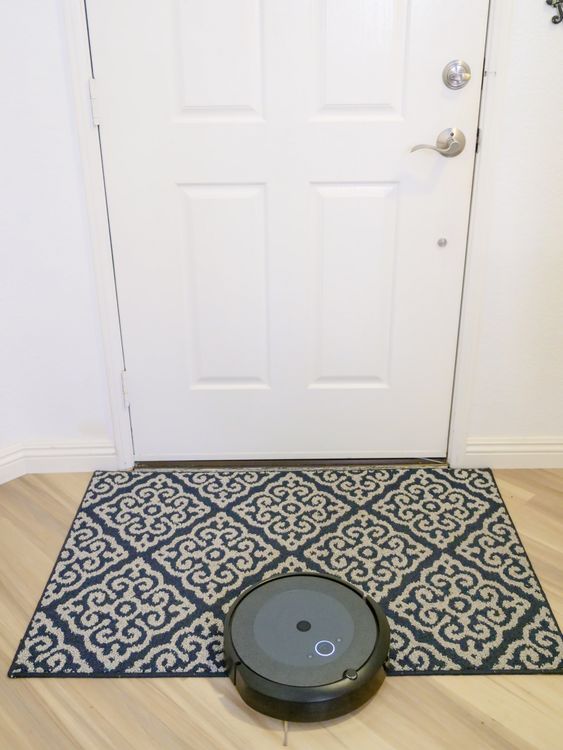
Check the actual floor surfaces. Hard floors with open routes are generally easier for a robot than thick rugs, uneven transitions, or deep carpet. A machine may cross one threshold but repeatedly fail on another of similar height because of angle, traction, or nearby obstacles.
If the home has stairs, the robot cannot clean them. Edge sensors are useful, but do not treat any device as a reason to leave an unsafe stair edge or raised platform unattended without following its instructions.
Accept a short floor-prep routine
The most effective homes for robot cleaning have a predictable reset: lift charging cords, move lightweight toys, pick up clothing, and check for pet accidents. This may take only a few minutes, but it is still work. If the floor is usually unavailable, a robot cannot create open space by itself.
Cable clips and trays can make preparation permanent rather than repeated. Route wires safely along furniture or walls, never beneath rugs or across walking paths merely to hide them from the machine. A basket for shoes and toys near where they land can make the reset easier.
Set a realistic no-go area for a complicated desk or craft corner. Cleaning most of the home reliably is better than repeatedly trapping the robot under one chair.
Do not overestimate obstacle avoidance
Modern robots may use cameras, lasers, structured light, or other sensors to navigate and identify objects. None should be assumed to recognize every small cable, sock, toy, or pet mess in every lighting condition. Read the exact model's documented capabilities and limitations.
Camera-based systems raise privacy questions as well as navigation benefits. Review what images or maps the app stores, whether data can be deleted, and which functions need a cloud account. The Federal Trade Commission recommends securing internet-connected devices, keeping firmware updated, and disabling features you do not use.
Before an unattended run, test the route while someone is home. Observe where the machine stalls or drags items. Modify the environment rather than assuming a software update will solve every physical problem.
Compare cleaning coverage, not suction slogans
Suction figures are often reported without a common consumer test setup. They do not by themselves tell you how well a robot cleans a rug, lifts fine dust at an edge, or handles larger crumbs. Brush design, floor contact, navigation, and how often the robot runs matter.
A robot can maintain a reasonable baseline through frequent passes. It may still leave corners, stair treads, upholstery, and areas behind closed doors for a conventional vacuum. On thick carpet, a capable full-size vacuum may be necessary for deeper cleaning.
The U.S. EPA recommends regular cleaning to reduce indoor dust and notes that HEPA filtration can help retain some vacuumed dust. A filter label on a robot does not describe the complete airflow path or the dust released while emptying the bin.
Think carefully about pets
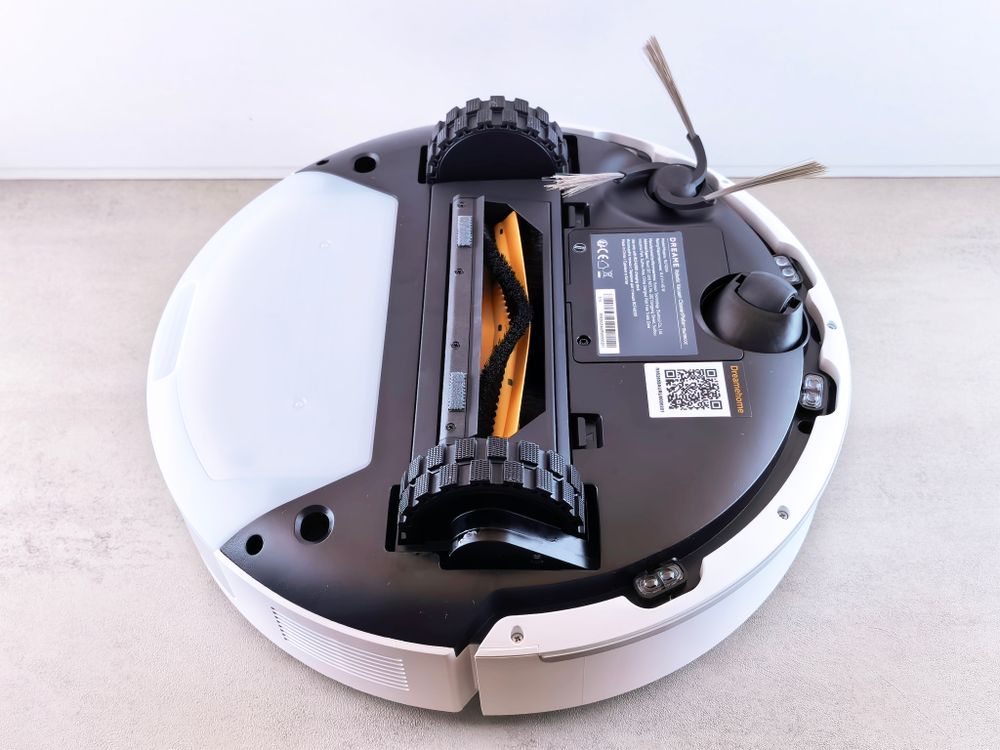
Pet hair can fill a small bin quickly and wind around brush ends. Examine how the main brush and side brushes are removed, whether replacements are affordable, and how often the manufacturer recommends cleaning them.
A scheduled run while a pet is alone can be risky if there is a chance of accidents, spilled water, or toys on the floor. Even advanced object recognition is not a guarantee. A cautious owner can run the machine after a brief inspection and close doors to sensitive areas.
Some pets dislike the sound or motion. Introduce the machine gradually and provide an escape route. Do not expect a robot vacuum to replace ordinary cleaning of beds, upholstery, or litter areas.
Choose a dock for the room you have
A simple charging dock occupies less space but requires frequent manual bin emptying. A self-emptying dock can reduce that task, though it is larger, noisier during emptying, and adds disposable bags or filters. Wet-mop docks may need clean water, dirty-water disposal, pad washing, and attention to odor.
Measure the dock's footprint and the clearance recommended around it. Place it near a suitable outlet without stretching cords across a pathway. A dock hidden in a tight corner may be difficult for the robot to find or for a person to service.
Check whether the dock fits under shelving or beside furniture with the lid open. A glossy product photograph rarely shows the space required to remove a dust bag or water tank.
Wet mopping is a separate decision
Some robots drag a damp pad; others lift or agitate it. Neither approach should be assumed safe for every flooring finish. Consult the floor manufacturer's care guidance, especially for wood, laminate, and surfaces sensitive to standing moisture.
Mopping needs clean pads and correctly measured solution, if any is permitted. Using an unapproved cleaner can damage the machine or floor. A robot may spread a sticky spill rather than clean it; larger messes should be handled directly.
If rugs cover much of the floor, confirm how the machine avoids wetting them. A “mop lifting” claim needs an actual clearance measurement for the rug thickness in your home.
Evaluate the app without surrendering the room
Mapping, room selection, schedules, and no-go zones can make a robot far more useful. Test whether the app supports the number of floors and users required. Ask what the machine does when Wi-Fi is unavailable and whether basic cleaning can be started on the device itself.
Review permissions rather than granting location, camera, and notifications by habit. Use a unique account password and enable available security features. If the vendor stops supporting a cloud service, the remaining local functions may be limited; look for clear documentation.
Maps are not always perfect. Moving furniture, opening doors, and reflective surfaces may require remapping or editing. A useful interface should make those corrections straightforward.
Maintenance is part of ownership
Bins, filters, brushes, wheels, sensors, and charging contacts need periodic care. Read the manual before buying and price replacement consumables. A dock that saves daily emptying may still require a weekly or monthly cleaning routine.
Use only the manufacturer's approved cleaning methods. Let washable filters and pads dry completely before reassembly. Hair wrapped at the brush ends can strain the motor even when the main brush appears clear.
Check battery replacement options and warranty coverage. A robot's useful life depends on parts and software support as much as on the initial battery runtime.
Calculate whether it saves time
Estimate the minutes spent preparing the floor, rescuing stalled runs, maintaining brushes, and cleaning areas the robot misses. Compare that with the conventional vacuuming it replaces. In an open apartment, the calculation may strongly favor automation. In a crowded room with deep rugs and frequent toys, it may not.
Use the return period to test ordinary days, not only a perfectly cleared floor. Keep packaging, read restocking terms, and record recurring failures. A robot that completes 80 percent of the useful area reliably may be a better fit than a more elaborate model that repeatedly needs intervention.
A useful supplement, not a magic reset
Robot vacuums are strongest as maintenance tools. They can collect routine dust and crumbs while the household attends to other things, provided paths are open and the dock is easy to service. They cannot organize a room, make a thick rug easy to clean, or guarantee avoidance of every object.
Buy for the floor plan you have, establish a small prep habit, and judge the machine by successful completed runs. The right robot does not eliminate all floor cleaning. It removes enough repetitive work to earn its space.
Sources and further reading
- U.S. Environmental Protection Agency, indoor particulate matter and vacuuming: https://www.epa.gov/indoor-air-quality-iaq/sources-indoor-particulate-matter-pm
- Federal Trade Commission, securing internet-connected home devices: https://consumer.ftc.gov/articles/securing-your-internet-connected-devices-home