

Quiet luxury is easy to reduce to a shopping list: cream upholstery, dark wood, stone, linen, and one expensive-looking lamp. But rooms assembled from that list can feel more like a trend display than a settled home. The convincing version is less about recognizable products and more about proportion, material honesty, maintenance, and the confidence to leave space unfilled.
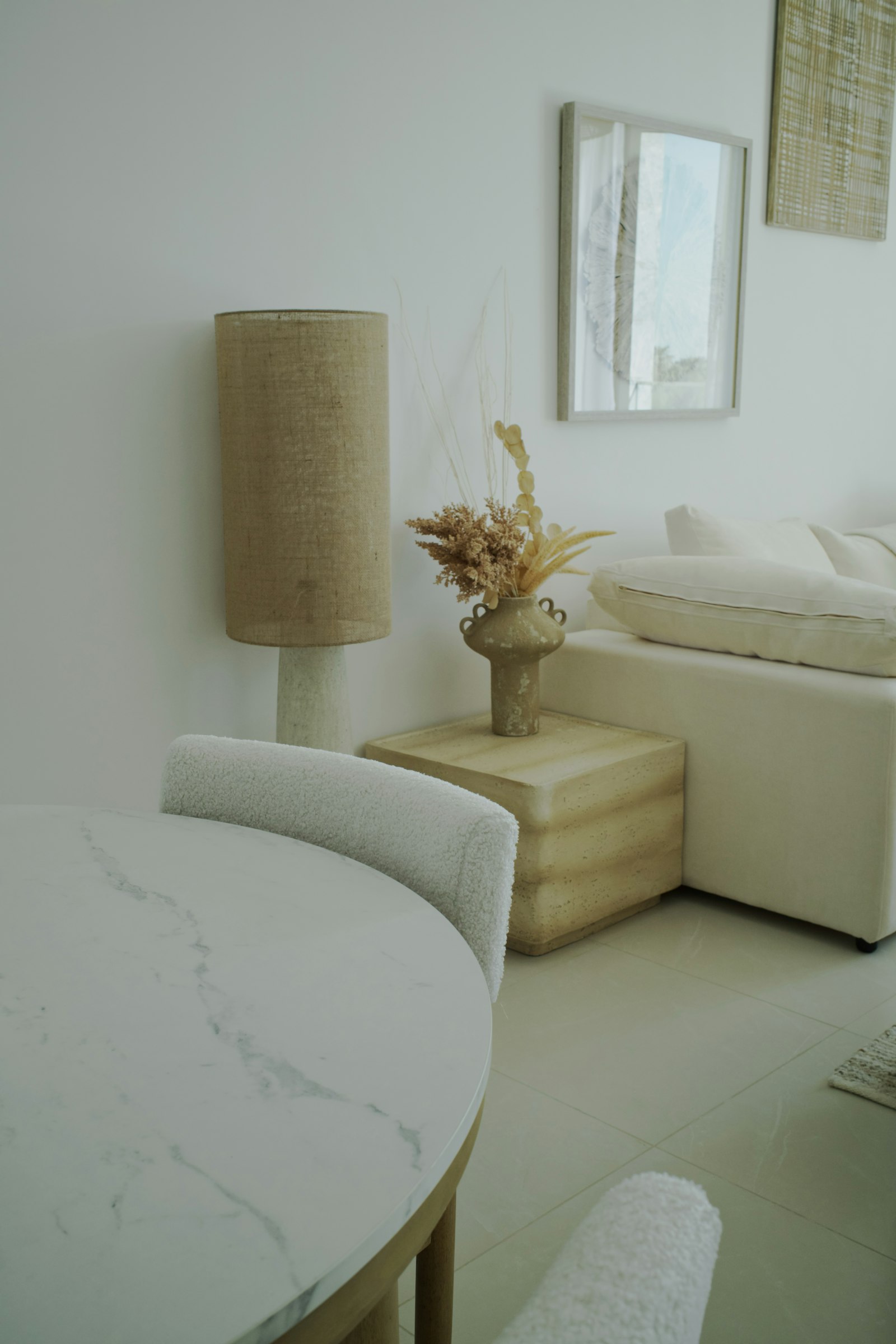
That makes the look more accessible than it first appears. Good dimensions cost nothing. Repairing a loose handle costs little. A secondhand wood table can bring more depth than a new imitation selected only because it resembles a hotel lobby.
Begin with condition
Luxury is difficult to communicate through dirty windows, loose hardware, peeling caulk, frayed cords, and furniture that rocks. Address visible maintenance before decoration. Wash or repair curtains, touch up small paint damage, clean lampshades, tighten knobs, and replace broken switch plates with appropriate matching parts.
Condition does not mean everything must look new. Patina on wood or aged metal can add character when the object is sound and cared for. Neglect and age are different. Clean gently according to the material and avoid aggressive refinishing that removes the quality you hoped to preserve.
Decluttering also reveals what is already valuable. Clear crowded surfaces and return a smaller number of useful or meaningful objects. The aim is not emptiness; it is legibility.
Correct proportion before buying detail
A well-scaled room feels composed even when its contents are modest. Curtains that reach the intended hem, a rug that connects the seating, lamps large enough for their tables, and art related to the wall have more impact than expensive accessories.
Use painter's tape to test scale. Mark the proposed rug, artwork, or console on the floor and wall. Look from the doorway and normal seating positions. Tiny objects scattered across a large room create visual noise; one larger object with breathing space often feels calmer.
Furniture does not need to form a matching suite. It does need to share believable scale. A delicate vintage side table may look stranded beside an oversized sectional unless another lighter element helps bridge the contrast.
Let materials look like themselves
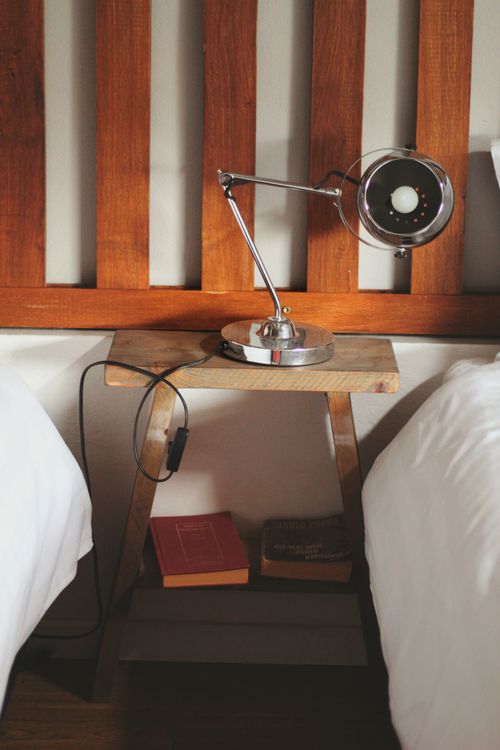
Quiet interiors often rely on materials with natural variation: wood grain, linen slubs, wool texture, stone markings, unlacquered or aged metal, and handmade ceramics. The purpose is not to collect expensive substances. It is to avoid surfaces that imitate several things at once.
Affordable solid wood appears frequently in secondhand tables, stools, frames, and cabinets. Veneer can also be beautiful and resource-efficient when treated as veneer rather than sanded like thick lumber. Learn the construction before repairing it.
Natural fiber is not automatically the right choice for every household. A durable synthetic upholstery may be more sensible around pets or spills. Material honesty includes acknowledging practical needs rather than hiding them behind a lifestyle label.
Use a disciplined palette
Warm whites, taupe, brown, charcoal, muted green, and deep blue are common because they allow texture and form to lead. They are not mandatory. A restrained room can include red, ochre, or plum when those colors recur thoughtfully and the surrounding field is controlled.
Work from fixed finishes: flooring, cabinetry, stone, and major furniture. Choose a background related to their undertones, a middle value, a dark anchor, and a limited accent. Exact matching is less important than avoiding a collection of unrelated near-neutrals.
Sample paint and fabric in the room across the day. A costly mistake is still a mistake; careful observation is more luxurious than a brand name.
Spend on touch points
Handles, faucets, switches, bedding, towels, and the chair used every day are noticed repeatedly. Improving one worn or uncomfortable touch point can change the room more than decorative objects viewed from a distance.
This does not justify replacing functional fixtures indiscriminately. Clean and adjust first. If hardware is changed, measure hole spacing and keep the original pieces in a labeled bag. Mixed metals can coexist when repeated; replacing every finish to achieve perfect uniformity may create waste without improving the room.
For textiles, judge weave, seam construction, care, and hand. A simple cotton or linen-blend curtain hemmed to the correct length can look more considered than a costly panel puddled awkwardly on the floor.
Buy secondhand with a plan
Older furniture is useful when it supplies material quality, unusual proportion, or a story the room lacks. Search by dimensions and construction rather than trend terms. Bring a tape measure and inspect for movement, odor, water damage, missing veneer, pests, and repairs.
Drawers should operate, doors should align reasonably, and structural joints should be sound or repairable. Upholstered pieces require greater caution because their internal condition is difficult to assess. Consider professional cleaning or reupholstery costs before purchasing.
Do not buy a bargain that has no job. Storage and transport can erase the value of an object acquired only because it looked expensive.
Improve lighting at several heights
Layered light creates depth and allows a room to change after dark. Combine ambient light with table or floor lamps and focused light for art or tasks. Keep bulb color appearance reasonably consistent and select output appropriate to the activity.
Large shades and substantial lamp bases can make existing furniture feel better proportioned. Secondhand lamps should be inspected for cord and socket condition; rewiring may be appropriate. Use bulbs within fixture ratings and keep flammable materials clear.
Dimmers are useful when compatible with the fixture and bulb. Electrical work beyond normal plug-in use should follow local requirements and appropriate expertise.
Make storage disappear into routines
Quiet rooms are not maintained by hiding everything moments before a photograph. They have convenient places for remote controls, chargers, mail, toys, and blankets. A lidded box, drawer divider, basket, or cabinet can reduce visual noise if it sits near where the item is used.
Avoid buying many small organizers before editing possessions. Containers can preserve clutter as effectively as they conceal it. Assign a limited boundary and remove duplicates that exceed it.
Cables deserve a planned route. Visible tangles undermine an otherwise calm room, but cords should never be pinched, covered by rugs, or arranged in unsafe ways merely for appearance.
Keep decorative objects specific
Books you read, art you care about, travel objects, photographs, and handmade pieces give restraint a human center. Generic sculpture purchased to fill a shelf often lacks that weight. Leave the space open until the right object appears.
Group objects by relationship rather than spacing them evenly. Vary height and shape, then remove one item and compare. A tray can create a boundary on a large table, but not every surface needs a styled vignette.
Frames do not need to match. Repeating one finish, mat color, or alignment is enough to create order across varied artwork.
Avoid false economies
An inexpensive sofa that loses support quickly is not affordable in the long term. Neither is a delicate cream rug that requires constant professional cleaning in a busy entry. Quiet luxury should support life, not police it.
Compare warranties, replacement parts, repair options, care requirements, and delivered cost. Spend more only where construction and service justify it. Some categories are better bought modestly and replaced rarely; others benefit from a repairable, long-lived choice.
Wait through sales pressure. A room assembled gradually can respond to real needs and avoid the expense of replacing placeholder purchases.
Edit with time
Complete the functional changes, then live with the room. Take photographs in morning and evening light. Notice where clutter returns, which chair is ignored, and whether the lamps support actual activities. Make the next decision based on use.
The most persuasive quiet-luxury room does not look untouched. It looks maintained, proportioned, and personal. Its materials suit their jobs, its useful objects are easy to reach, and it contains fewer compromises disguised as decoration. Those qualities require patience and attention far more than a luxury budget.
Sources and further reading
- Federal Trade Commission, environmental marketing guidance: https://www.ftc.gov/business-guidance/resources/environmental-claims-summary-green-guides
- U.S. Environmental Protection Agency, reducing and reusing materials: https://www.epa.gov/climate-change/what-you-can-do-about-climate-change-waste