

A portable air conditioner looks like a convenient answer to a hot room: roll it in, plug it in, and cool the space. The reality is more involved. The unit must exhaust heat outdoors, occupy floor space, make noise inside the room, and sometimes collect water. Those compromises may be entirely acceptable when a window unit is forbidden or impractical. They should be understood before delivery, not discovered during the first heat wave.
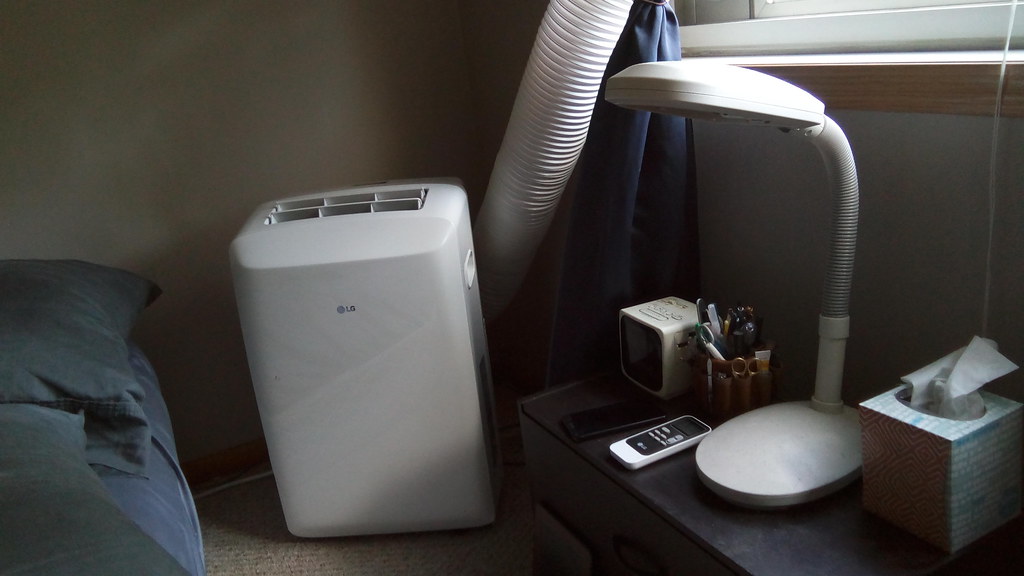
This is a buying framework, not a hands-on ranking. Cooling figures, sound levels, and moisture behavior vary by model and conditions. The aim is to identify the questions that determine whether a portable unit fits a particular home.
Decide whether portable is the right category
If a properly installed window unit or mini-split is allowed, compare those options before defaulting to a portable floor unit. A portable unit brings the compressor and other noise-producing parts into the room, while its hot exhaust must travel through a hose. It also takes space that a small bedroom may not have.
Portables remain useful for renters whose building prohibits window-mounted equipment, rooms with unusual windows, and situations where a permanent installation is not possible. “Portable” means movable within practical limits, not vent-free. Most compressor-based portable air conditioners need an exhaust route to the outdoors for cooling mode.
Check lease rules, building rules, window access, and the electrical circuit first. A model is not a solution if its vent kit cannot be fitted safely.
Measure the room and its heat load
Record floor area, ceiling height, sun exposure, insulation, window size, and how many people or heat-producing devices occupy the room. A small south- or west-facing room may be harder to cool than a larger shaded one.
Manufacturers often advertise capacity in BTU per hour. Portable units may show more than one rating, including a seasonally adjusted cooling capacity under a specified test procedure. Compare like with like rather than choosing the largest headline number on different boxes. The U.S. Department of Energy maintains the test and standards framework for portable air conditioners; look for the exact rated measure on the product label and specification sheet.
Oversizing is not automatically better. A unit that cycles frequently may manage humidity poorly in some conditions and may be unnecessarily loud or expensive. Undersizing leaves the compressor running without reaching a comfortable result. Use a manufacturer sizing guide as a starting point, then account for the room's actual sun and heat sources.
Understand the exhaust arrangement
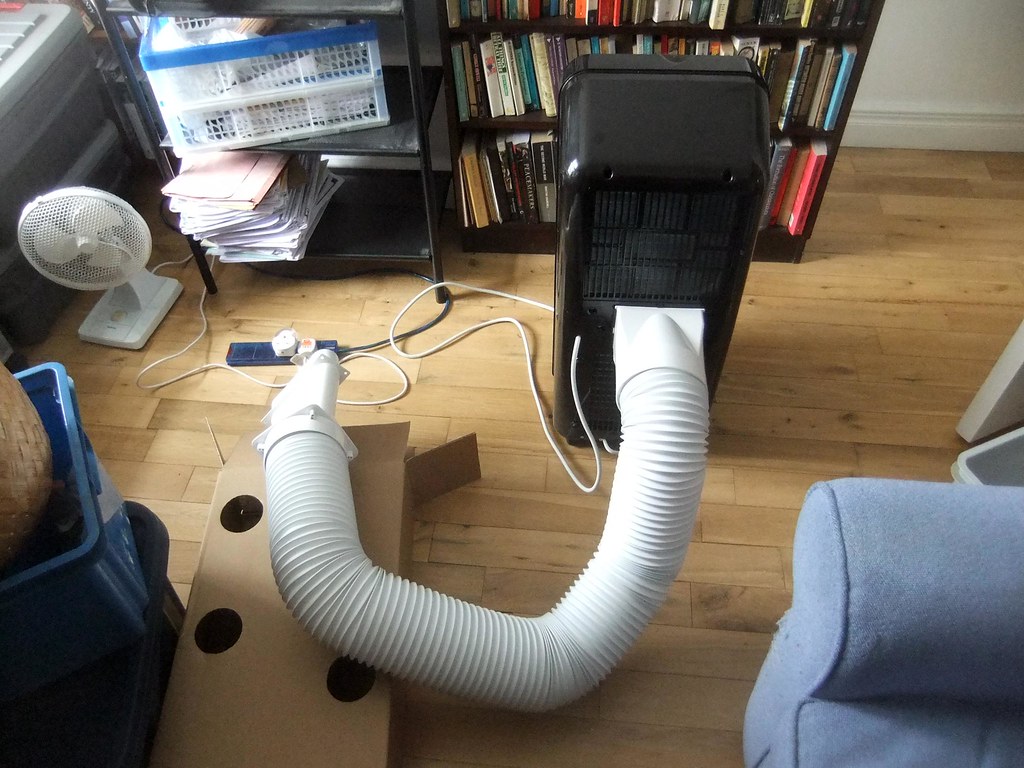
A single-hose portable takes air from the room and exhausts heated air outdoors. This can draw replacement air into the room through gaps elsewhere. A dual-hose design has separate intake and exhaust paths for the condenser, which may reduce that pressure effect, though actual performance depends on the complete design and installation.
Neither arrangement works well with a crushed, extended, or poorly sealed hose. Follow the manufacturer's specified hose length and routing. Keep it as short and straight as the installation allows, without unsafe tension on the window kit or unit.
Do not vent into an attic, wall cavity, garage, or another room. The heat must leave the conditioned space appropriately. A loose panel that allows hot air back inside undermines cooling and can invite insects or rain.
Test the window before buying
Window kits are often pictured in a standard vertical sash window. Sliding, casement, and unusually tall or narrow openings may need a manufacturer-approved accessory or a carefully planned insert. Measure the clear opening and determine whether the window can still close securely around the kit.
Consider weather and security. An insert should resist casual displacement, limit rain intrusion, and meet building rules. It must not block a window needed for emergency escape without an appropriate alternative. If the window is difficult to reach, ask whether the hose can be attached and removed without unsafe climbing.
Do not assume that every “universal” adapter seals every window. Read the kit dimensions and reviews for the exact opening style.
Plan for condensate water
Cooling humid air removes moisture. Some units evaporate much of that condensate into the exhaust stream under certain conditions; others require a drain hose or periodic emptying. The frequency can change dramatically with weather and operating mode.
Read the manual for cooling and dehumidification separately. A unit that rarely needs emptying during ordinary cooling may fill quickly in dedicated dry mode. Confirm the height and access of the drain port. If continuous drainage is planned, identify a suitable drain route with the required slope or an approved pump arrangement.
Never run a hose across a walking path or into a container that can overflow unnoticed. Water near electrical equipment or flooring can cause damage. A full-tank shutoff is helpful, but it does not replace checking connections.
Noise is not a minor specification
The portable's compressor operates inside the room. Even a unit with a tolerable average sound level may produce a noticeable startup, vibration, or high-frequency fan sound. Published decibel figures are most useful when measured under comparable conditions and at the speed you expect to use.
For a bedroom, imagine the unit cycling during sleep. For a home office, consider video calls. A night mode may reduce fan speed but also reduce cooling. A display that can dim is useful in a dark bedroom.
If possible, hear a model in operation. Customer descriptions of tone and vibration can add context, though room acoustics and installation vary.
Give the unit breathing room
Measure the cabinet plus the space needed around its air inlets, outlet, hose, and drain. Follow the manual's clearances. A portable placed tightly between a bed and wall may recirculate warm air or be difficult to service.
The exhaust hose can become hot, so keep it clear of heat-sensitive materials and avoid sharp bends. The unit should sit on a level, stable surface. Wheels help on smooth flooring but may struggle at rugs and thresholds; lift according to the maker's instructions rather than pulling by the hose.
Consider where the unit lives off-season. Storage requirements may include draining, drying, cleaning filters, and keeping the unit upright. A “portable” machine can be heavy to carry up stairs or into a closet.
Check power requirements
Use an appropriate outlet and circuit according to the manual. Many portable air conditioners should be plugged directly into a grounded wall outlet rather than a generic extension cord or power strip. Confirm voltage, plug type, current draw, and whether other high-load appliances share the circuit.
Repeated breaker trips, hot plugs, or damaged cords call for stopping use and seeking qualified electrical advice. Do not solve an overloaded circuit by adding a longer cord.
If the unit offers a timer or app controls, basic physical operation should remain understandable. A schedule can avoid unnecessary running, but the room's cooling need and occupant safety matter more than an automated setting.
Compare efficiency on the same basis
Operating cost depends on electrical use, local rates, weather, thermostat setting, and hours of operation. Compare the relevant efficiency figure on comparable product labels rather than relying on a claim such as “energy saving.” A higher purchase price does not necessarily pay back within one summer of limited use.
Seal obvious air leaks around the vent insert and manage solar gain with appropriate shading. Those changes can improve comfort regardless of which unit you choose. Keep filters clean as instructed so airflow is not restricted.
A fan can make occupants feel more comfortable, but it does not replace the portable unit's need to remove heat when outdoor conditions demand cooling. Set the thermostat to a realistic comfort level rather than the lowest available number.
Maintenance and service matter
Check how the filter is removed, cleaned, and dried. Dust can accumulate on intake grilles and reduce airflow. The condensate system may need seasonal cleaning. Follow the manufacturer's instructions and never use a cleaning chemical inside the unit without approval.
Ask about warranty service, replacement hoses, window panels, remote controls, and drain caps. A proprietary vent adapter can be harder to replace than a filter. Keep the exact model number, receipt, and manual.
Inspect the delivery promptly. Portable units can be damaged in transit, and the maker may specify an upright waiting period before operation after shipping. Follow that instruction rather than testing immediately if the package arrived on its side.
A practical decision test
Before ordering, verify five things: the unit's rated cooling capacity under a comparable standard, the exact window fit, an acceptable exhaust route, a safe power supply, and a plan for noise and condensate. Then measure the floor and storage footprint.
If those conditions are met, a portable air conditioner can be a reasonable compromise for a difficult room. If any one fails, a higher advertised BTU figure will not rescue the purchase. The best choice is the system that can be installed correctly and used comfortably through the hottest part of an ordinary day.
Sources and further reading
- U.S. Department of Energy, portable air conditioner standards and test procedures: https://www.energy.gov/cmei/buildings/portable-air-conditioners
- U.S. Department of Energy, room air conditioner purchasing guidance: https://www.energy.gov/cmei/femp/purchasing-energy-efficient-room-air-conditioners