

A closet can look organized for a photograph and fail by Monday. The usual culprits are shelves installed where doors block them, hanging rails too high for daily use, baskets that conceal rather than sort, and too much clothing returned after the makeover. A better closet begins with an inventory and a tape measure, not a kit.
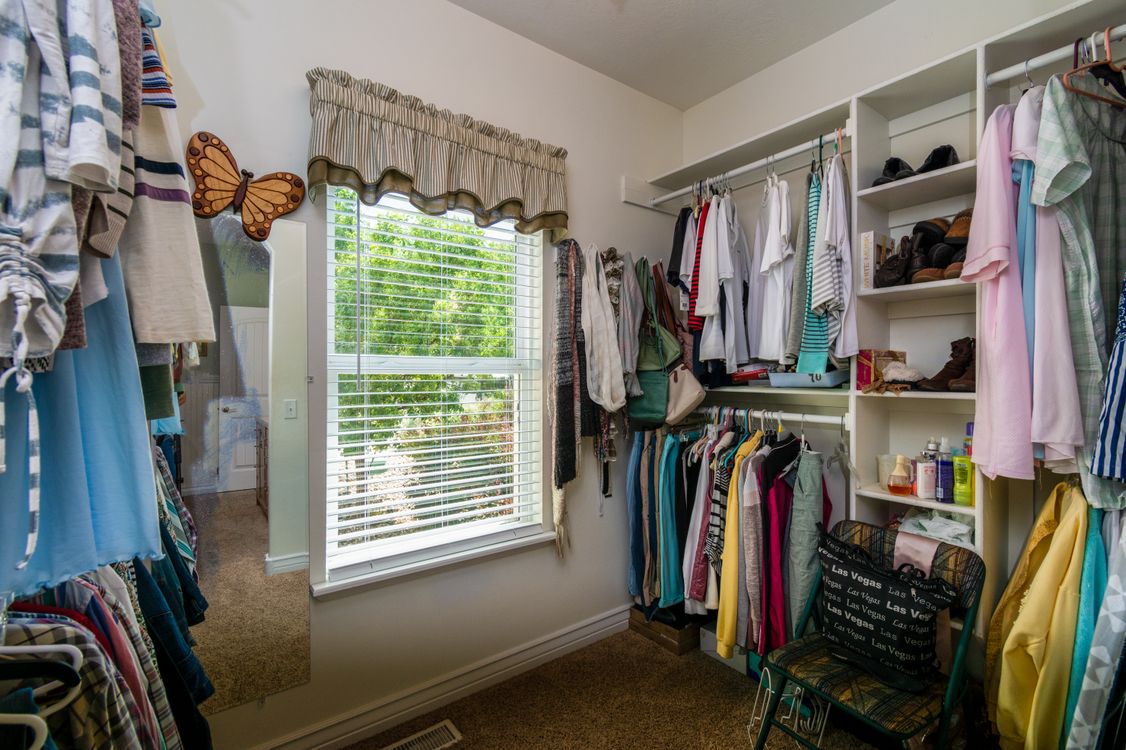
This project can be modest. You may only need one additional shelf, a lower rail, and a better place for shoes. Or the space may justify a full modular system. Either way, the goal is to make the most common action—putting something away—as easy as taking it out.
Empty and classify before designing
Take everything out, including objects stored on the floor and top shelf. Group items by how they are used: everyday hanging clothes, long garments, folded clothes, shoes, bags, seasonal items, and household overflow. Donate or repair what no longer serves you, but do not turn the organizing project into a rushed decision about every sentimental object.
Count hangers and measure the width they occupy when garments can move freely. Fold a representative stack and measure its height and depth. Identify the longest hanging item. A plan based on real objects is much more reliable than a generic diagram promising a certain number of shirts.
Separate active clothing from out-of-season storage. The everyday zone should not require reaching over boxes used twice a year.
Measure the closet as it is
Record width at the front, middle, and back, and height at several points. Older walls and floors are rarely perfectly square. Note baseboards, trim, vents, outlets, access panels, and the position of every door hinge or track.
Measure usable depth after doors close, not just wall-to-wall depth. Check how far sliding doors overlap and which side remains hard to reach. Open hinged doors fully while someone stands in front of the closet. A drawer unit that fits inside may still be impossible to open.
Draw a simple elevation and floor plan. Mark the existing rail and shelf, then sketch proposed changes in pencil. Do not order components until the largest piece can pass through the opening and turn into position.
Give the easiest reach to everyday items
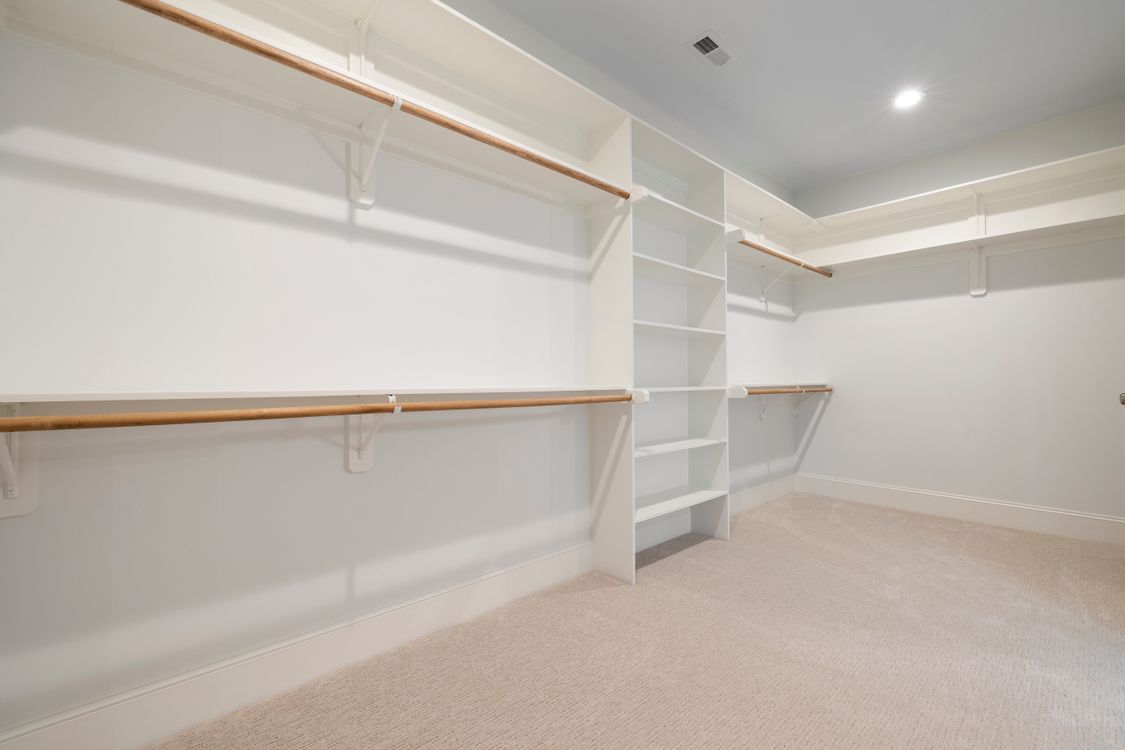
Place frequently used clothing between comfortable waist and eye height. Higher shelves suit light seasonal pieces in labeled containers; lower shelves suit shoes and robust items. Avoid storing heavy boxes overhead where they must be lifted awkwardly.
If two people share the closet, assign zones by actual wardrobe volume rather than dividing the width automatically in half. A person with mostly folded items needs different storage from someone with suits and dresses.
Keep one small buffer area. A closet packed to its mathematical capacity is hard to use and quickly returns to the floor. The purpose of a system is not to maximize the number of objects it can hold.
Choose hanging height deliberately
Double-hanging sections can increase capacity for shirts, jackets, and trousers folded over hangers. They do not work for long coats or dresses. Measure the longest garment in each group, then allow clearance above the lower rail and beneath the upper one.
Do not rely on a universal rail height. A user should reach the daily rail without standing on a stool. Children can use a lower zone that is adjusted as they grow. An upper pull-down rail may be useful, but check its load rating and whether it can be operated comfortably when full.
Mount rails into supports designed for the expected load. A span that looks strong when empty may sag after months of winter coats.
Use shelves to reduce wasted vertical space
One high shelf over a rail often leaves a large inaccessible void. A second shelf may help if items can be retrieved safely, or a vertical divider can create narrower bays for folded clothing. Shelves that are too deep hide a second row of objects and encourage forgotten purchases.
Open shelves work well for visible, frequently used items. Closed bins can control seasonal accessories, but label them clearly and avoid opaque containers for things used daily. Leave space for hands to lift a box without scraping the shelf above.
Adjustable shelf standards offer flexibility. Review the manufacturer's span and load specifications and use the correct brackets. A long shelf may need center support even when the board itself feels substantial.
Plan shoes according to their shape
Shoe storage is often drawn as a neat grid of identical rectangles. Real footwear includes boots, sandals, heels, and bulky sneakers. Measure the tallest and widest pairs, then decide which need individual access and which can share a bin.
Allow damp shoes to dry before placing them in closed storage. A washable tray under frequently worn pairs protects the floor. For seasonal shoes, clean them first and store them where they will not be crushed.
Over-door organizers can be useful for small accessories, but check door clearance and hardware. A heavy organizer may strain hinges or prevent a door from closing correctly.
Treat anchoring as part of the build
Tall freestanding closet towers and clothing storage furniture can tip, particularly when drawers are open or a child climbs. Follow the maker's anchoring instructions. The U.S. Consumer Product Safety Commission's Anchor It campaign emphasizes anchoring dressers and other storage furniture even when they comply with newer stability rules.
Wall-mounted shelves and rails need fasteners suited to the wall material and load. Locate studs or other structural support when the system requires it. Drywall anchors are not interchangeable, and published capacities depend on correct installation.
Before drilling, consider hidden electrical wiring and plumbing. If the wall construction or safe route is unclear, seek qualified help. Do not mount heavy storage on an uncertain surface simply to keep the project on schedule.
Improve lighting without creating hazards
A closet that is dark at the back makes even good organization harder to maintain. Clean the existing fixture and use an appropriate bulb within its rating. A rechargeable or battery-powered light can help in a small space, provided it is mounted securely and charged according to instructions.
Do not run a loose cord through a door opening or bury a power strip behind clothing. Lighting installed inside a closet must follow applicable electrical and clearance requirements; a qualified electrician is appropriate for new wired fixtures.
Check whether a mirror or light outside the closet would solve the problem more simply. Not every dark corner needs hardware inside it.
Test the layout before permanent work
Painter's tape can mark shelves and rails on the wall. Stack boxes to approximate shelf depth and use hangers to check whether clothes clear the door. Live with temporary bins for a week. If frequently used items still end up on the floor, the proposed location may be too awkward.
Buy a small sample of hangers or containers before replacing everything. Uniform hangers can save visual space, but the wrong shape can stretch knitwear or let slippery fabric fall. A system should fit garments, not force garments to fit it.
Keep receipts until the components have been installed and loaded. Modular lines can change, so record product names and dimensions for future additions.
Install in a sensible sequence
Patch and paint while the closet is empty, allowing finishes to cure as directed. Mark level reference lines, locate safe fastening points, and install structural supports before shelves, rails, or drawers. Follow the system's order of assembly and load limits.
Use a stable step ladder appropriate to the task. Do not stand on shelves or a rolling chair. Ask for help holding long rails or heavy panels. After assembly, check that components are level, firmly attached, and do not interfere with doors.
Load gradually, starting with heavier items low. Recheck fasteners after the closet has been used for a while. If a shelf bows or an anchor loosens, remove the load and correct the installation rather than adding more brackets at random.
Keep the system honest
Return only items assigned to a zone. If a category does not fit, rethink the category or reduce its inventory. The top shelf should not become a permanent holding area for decisions deferred forever.
Once a month, clear the floor, return stray hangers, and check for dampness or pests. Seasonal transitions are a good time to rotate clothes, clean storage boxes, and reconsider whether a zone still matches use.
A better closet is not a prettier set of containers. It is a set of measured relationships between objects, reach, doors, and safe support. When those relationships are right, the ordinary act of putting clothes away stops feeling like a small daily puzzle.
Sources and further reading
- U.S. Consumer Product Safety Commission, Anchor It furniture safety: https://www.anchorit.gov/
- Occupational Safety and Health Administration, ladder safety principles: https://www.osha.gov/etools/construction/falls/ladder-safety