

The most interesting room is rarely furnished in a single afternoon. A table survives from one home, a new sofa arrives years later, and a chair found secondhand turns out to be more comfortable than the carefully chosen matching pair. Mixing old and new can give a space depth and avoid the flatness of a complete furniture set. It can also become an assortment of unrelated bargains if every purchase is made in isolation.
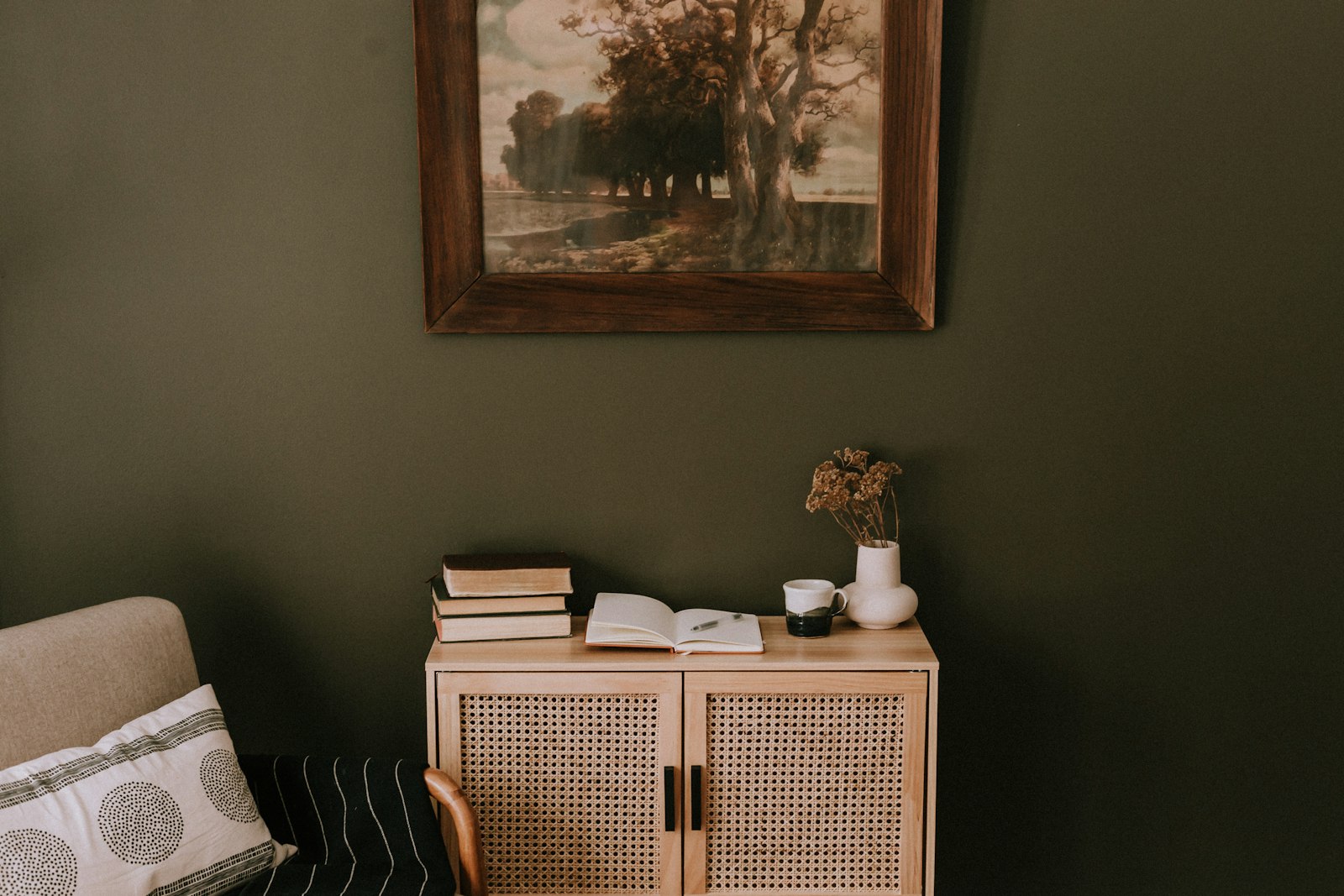
The difference is not a strict percentage of vintage pieces. It is a set of relationships: scale, color, material, shape, and the amount of visual attention each object demands. Once those relationships are understood, an apparently awkward inherited cabinet may become the room's most useful anchor.
Start with the pieces that must stay
List the furniture you already own and intend to keep. Include its dimensions, finish, condition, and role. A large new sectional and a small antique writing desk can coexist, but they may need a medium-scale lamp, rug, or chair to connect their proportions.
Notice the fixed architecture as well. Original trim, flooring, windows, and built-in shelves already carry an era. A modern room with old oak floors does not begin from a blank slate; a period house with a new kitchen does not have to imitate its original year in every room.
Take photographs from the doorway and from normal seating positions. The camera often reveals whether one piece dominates or disappears.
Let scale do more work than style labels
An ornate small table next to a very deep contemporary sofa may look fragile, not because one is old and the other new, but because their visual and physical weights are far apart. Compare seat heights, arm thickness, leg profiles, and the open space beneath pieces.
Bridge extremes with something intermediate. A contemporary sofa with slim legs can connect to a midcentury wood cabinet more easily than an oversized blocky sofa might. A substantial modern lamp can give a delicate vintage table a more confident presence.
Measure function as well as appearance. The beautiful old chair may be too low for the new dining table. A historic sideboard may be too shallow for modern serving equipment. If a piece cannot perform its job, find it another one instead of forcing a picturesque arrangement.
Repeat one element, not every element
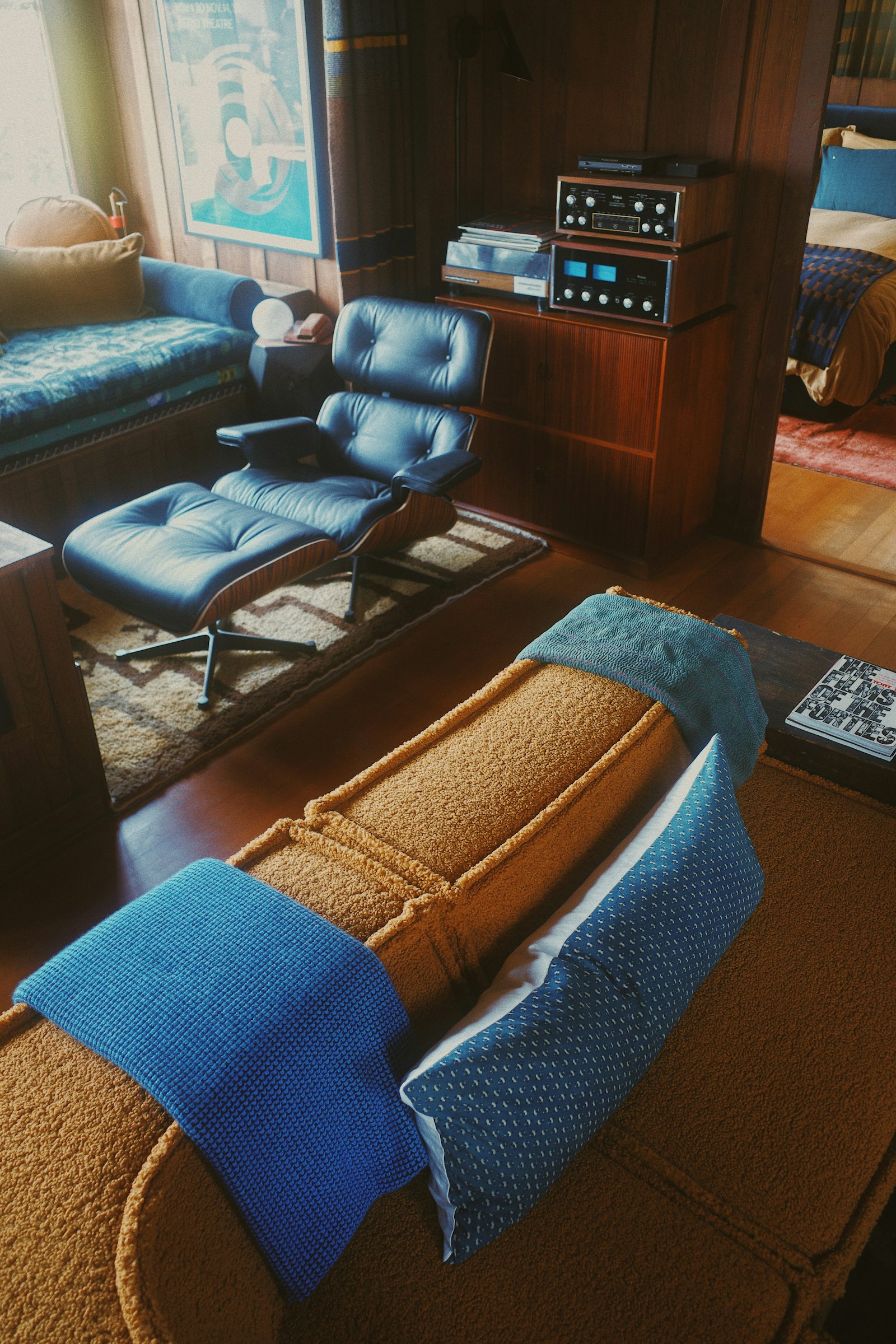
A room reads as deliberate when a few notes recur. It may be the warm brown of a vintage table echoed in a picture frame, the black metal of a new lamp repeated in old cabinet hardware, or a curved line appearing in both an antique mirror and a contemporary chair.
Do not match every wood stain. Near-matches can look more awkward than confident differences. A pale oak desk, dark walnut cabinet, and painted chair can work when the palette repeats elsewhere and one finish does not occur as an isolated accident.
The same principle applies to metals. Brass and steel can coexist when each appears more than once or has a clear role. Replacing every handle to force uniformity can strip the character from an older piece.
Give strong pieces breathing room
A carved cabinet, patterned rug, sculptural chair, and dramatic pendant may all be appealing, but each asks for attention. Put too many together and no one piece can be appreciated. Choose the main character of a wall or seating group and let quieter pieces support it.
This is particularly important with vintage furniture because details may be denser: turned legs, veneers, inlay, decorative pulls, or visible patina. Surrounding every such piece with similarly detailed objects can make a room feel busy even in a restrained color palette.
An ordinary modern piece can be the visual pause. Simple upholstery, a plain wall, and a clean-lined lamp make older craftsmanship easier to see.
Use textiles as a bridge
A rug or curtain can connect colors that otherwise seem unrelated. A patterned rug containing both the dark tone of an old cabinet and the pale tone of a new sofa can make the combination appear intentional. Do not choose it only for color; scale and cleaning requirements still matter.
Upholstery can also shift a piece's era. A vintage chair in a contemporary fabric may sit naturally beside a new sofa, provided the chair's frame is sound and reupholstery is appropriate. A new chair in a traditional woven fabric can soften a very modern room.
Avoid reupholstering a collectible or historically important piece without considering its value and construction. For ordinary secondhand furniture, price the entire job before treating a low purchase price as a bargain.
Do not erase age automatically
A scratch or uneven finish may be part of a piece's visual history. Clean it, stabilize loose parts, and see it in the room before sanding or painting. Broad refinishing can remove veneer, original color, or details that made the object appealing.
Differentiate patina from a problem. A gently worn edge can be attractive; a wobbling joint, sharp splinter, pest evidence, or lifting veneer needs attention. An old upholstered piece may conceal damaged padding or frame components and deserves careful inspection.
If paint may be from an older period, consider lead risks before sanding or scraping. A qualified professional is preferable when the material or historical value is uncertain.
Buy secondhand with a job in mind
Shopping without measurements is how charming objects become hallway clutter. Bring the intended width, height, depth, and route through doors or stairs. Measure the piece at its widest point, including projecting legs or handles.
Open drawers, check joints, smell the interior, and inspect the underside. Water damage, infestation, missing hardware, and poor repairs can make a low price expensive. Photograph any maker's mark and ask about provenance, but do not assume a seller's story is documentation.
Have a transport plan. A heavy dresser can damage floors or injure movers when handled casually. Protect fragile veneer edges and never lift a piece by its decorative top or drawer pulls.
Safety outranks the vintage look
Tall dressers, bookcases, and cabinets can tip, whether old or new. Follow appropriate anchoring guidance and keep heavy items low. If original construction makes anchoring unclear, ask a competent installer or conservator for an approach that preserves the piece while making it safe.
Old lamps may need electrical inspection or rewiring. A pleasing patina on a base does not make a brittle cord acceptable. Check bulb ratings, sockets, and stability. Antique furniture made for different use patterns may also need reinforcement before carrying modern equipment.
Avoid placing a large mirror or framed art where it can fall onto seating or a bed. A mix of eras should not mean a mix of unknown risks.
Let the room have its own timeline
There is no need to represent every decade. Two or three distinct eras can give a room tension without turning it into a survey. Contemporary pieces can provide daily comfort, while older ones add texture, repairability, or a story. Sometimes the reverse is true.
Personal objects make the mix believable: books you use, art chosen over time, and inherited pieces that have a reason to be present. Generic “vintage-look” accessories purchased by the dozen can feel less authentic than one ordinary item with a real connection to the household.
Do not worry that guests will identify the period of every chair. They will notice whether the room feels comfortable and coherent.
Edit after living with the arrangement
Move pieces before buying more. A cabinet that looks too formal in one corner may balance the room perfectly on another wall. A new sofa may need its old side tables separated rather than replaced. Photograph several configurations and leave the strongest one for a week.
If a room still feels random, find the most isolated element. Is it the only cool color, the only shiny finish, or the only small piece among massive furniture? Repeat that element deliberately or remove it. The solution is often one relationship, not a complete redesign.
Aim for continuity, not coordination
The point of mixing vintage and new furniture is not to demonstrate that mismatched objects can be made to look like a set. It is to build a room that feels accumulated with judgment. Let scale and function lead, repeat a few material or color notes, repair what needs repair, and resist filling every gap. When old and new pieces each have a purpose, their differences become the room's character rather than its problem.
Sources and further reading
- U.S. Consumer Product Safety Commission, Anchor It furniture safety: https://www.anchorit.gov/
- U.S. Environmental Protection Agency, lead-safe renovation guidance: https://www.epa.gov/lead/lead-renovation-repair-and-painting-program