

In a small home, a vacuum does not disappear into a utility closet. It may live beside the refrigerator or behind a bedroom door, ready for crumbs, tracked-in grit, and pet hair. Cordless stick models make quick cleaning attractive because there is no cord to unwind or canister to pull across furniture. But convenience alone does not make one a good primary vacuum.
The sensible purchase depends on the flooring, the size of the home, how often you clean, and where the machine and charger will live. This is a feature-based buying assessment, not a ranking based on hands-on tests. Product specifications can narrow the field; a return policy and a trial on your own floors can answer the remaining questions.
Map the surfaces first
List every floor surface and estimate its area. Hard flooring, low-pile rugs, thick carpet, stairs, upholstered furniture, and car interiors ask different things of a vacuum. A small apartment with mostly smooth flooring may need a lightweight floor head and good edge pickup. A home with deep carpet may require a more capable powered brush and enough battery life at the setting that actually cleans that carpet.
Note thresholds and furniture clearance. A low sofa is irrelevant if the floor head cannot fit beneath it. Measure the height of the head and how far the handle can recline. A model that lies flat may reach under a bed, but only if its body and dust bin also clear the frame.
If your home has delicate flooring, read the floor manufacturer's guidance on vacuum attachments. A brush roll or hard wheel can be unsuitable for a particular finish.
Treat runtime claims as conditional
The longest runtime on a product page is often measured at a low-power setting with a particular attachment. A powered floor head, high suction, and older battery can change the result. Look for runtime at several modes and the conditions used to obtain those figures.
For a small home, the right question is whether one charge covers your normal cleaning routine with a reasonable margin. Time yourself sweeping or vacuuming the whole space. Include moving furniture and changing attachments. If the machine cannot complete that job except at a setting that leaves debris behind, its advertised maximum runtime is not useful.
Replaceable batteries can extend service life and make larger jobs easier, but check the cost and actual availability of replacements. A second battery is an expense to include in the total price, not a free feature.
Understand weight in the hand
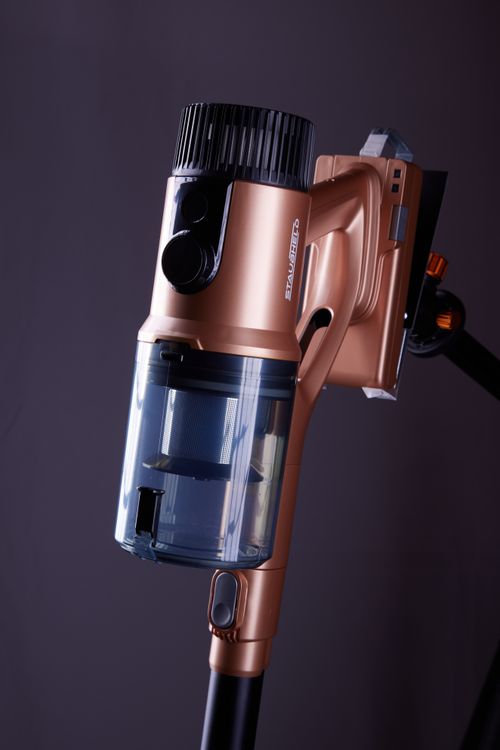
An overall weight figure does not explain balance. Some cordless vacuums place the motor and battery near the handle, making the wrist carry most of the load when cleaning shelves or ceilings. Others feel heavier at the floor head but easier to steer on open flooring.
Lift the machine into the positions you will use. Can you carry it up stairs with one hand? Can you hold the handheld unit above shoulder height long enough to reach curtains? Does the trigger require constant pressure? These details matter more to daily comfort than a small difference in catalog weight.
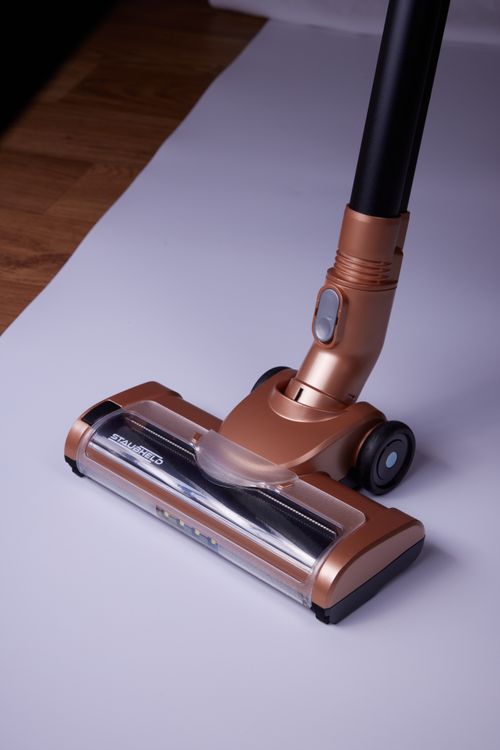
Test steering around chair legs. A very flexible head can be nimble yet difficult to hold on a straight line. Wheels should move smoothly on both hard floor and rug edges.
Match the brush to the debris
A soft roller can collect fine dust and larger crumbs on hard floors without scattering them as readily as some stiff brushes. A more aggressive bristled or hybrid head may help lift debris from carpet. No design is ideal for every floor, and a combination head may be a compromise worth accepting in a home with mixed surfaces.
Hair management is a practical issue. Examine how easily the brush roll can be removed and cleaned. A claim of “anti-tangle” does not mean no hair will ever collect around the ends or bearings. If a tool is needed, check whether it is included and where it can be stored.
Edge cleaning and debris size should also be considered. Fine flour-like dust, cereal, and litter behave differently. Demonstrations on a showroom patch of floor are useful only when they resemble your real debris and surface.
Look beyond a HEPA label
The U.S. EPA notes that a HEPA filter can help keep some vacuumed dust from escaping back into indoor air. But a filter's presence does not, by itself, describe the entire machine's sealing, maintenance, or how much dust escapes when the bin is emptied.
Ask whether the maker describes a sealed filtration path and how filters are cleaned or replaced. Review the price and availability of replacement filters. A filter that is washed must dry fully according to the instructions before reinstallation; running a vacuum with a damp filter can damage it.
People sensitive to dust should consider the emptying routine. A bagless bin can release a visible cloud over a household trash can. Emptying outside or into a larger bag may help, but a bagged vacuum may be a better fit for some households. Do not assume a cordless stick is the best allergy choice solely because the product page uses the term HEPA.
Judge the bin by frequency, not volume alone
Compact bins keep the vacuum light but fill quickly with pet hair or bulky crumbs. Check the fill line and how easy it is to release debris without touching the collected material. Some mechanisms push debris out; others leave hair wrapped around an interior screen.
Inspect the seals and hinges. A complicated bin can be awkward to wash and dry. Follow instructions about what parts may be rinsed, and never wet the motor housing or electrical contacts. Replace the bin only after all washable parts are completely dry.
In a small home, frequent emptying may be acceptable if the process is clean and simple. A larger bin is not automatically better if it adds bulk or encourages leaving debris inside for weeks.
Plan the charging location
Measure the storage spot with the vacuum, wand, floor head, and attachments assembled. A wall dock needs appropriate mounting hardware and a nearby outlet. Check for wires or plumbing before drilling, and follow the manufacturer's mounting instructions.
A freestanding charging stand avoids wall holes but takes floor space. A removable battery can charge separately, which may make storage easier. Check whether the charger remains plugged in and whether the manual gives guidance on battery storage during long absences.
Do not stretch an extension cord through a walkway or conceal it beneath a rug to make the dock fit. The charging solution should be as convenient and safe as the vacuum itself.
Attachments should earn their space
A crevice tool is useful for sofa seams and baseboards. An upholstery or mini powered head may matter if pets shed on furniture. A soft dusting brush can help with shelves, provided the vacuum's airflow and brush suit delicate objects.
Many bundles include several near-duplicate tools. Price the configuration that covers your actual tasks, then decide whether additional attachments justify their cost and storage. Confirm that tools lock securely and can be detached without excessive force.
Compatibility across model years is not guaranteed. If you expect to replace parts later, save the exact model number rather than assuming every accessory from the brand will fit.
Consider noise and maintenance
Cordless does not mean quiet. High-pitched motor noise may be more noticeable in a small apartment than a lower-frequency conventional vacuum. If noise matters, listen in person or compare measurements made under the same conditions, not unrelated marketing figures.
Every vacuum requires routine care: emptying the bin, clearing hair from the brush, checking the airway, cleaning filters, and eventually replacing worn parts. Read the manual before purchase. If a maintenance task requires several tools and a lengthy drying period, decide whether that routine is realistic.
Check the warranty for battery coverage and exclusions. Batteries are consumable components, and replacement terms may differ from those for the motor or frame.
The limits of a stick vacuum
A cordless stick can be excellent for frequent short sessions. It may struggle as the only vacuum in a home with substantial thick carpet, large rugs, or unusually heavy debris. It is not intended for wet spills, fireplace ash, construction dust, or hazardous materials unless the manufacturer explicitly designs it for those uses.
For a mostly hard-floor apartment, a convenient stick vacuum may lead to more frequent cleaning than a powerful but cumbersome machine. That behavioral advantage is real, though it does not replace suction and filtration appropriate to the job.
Compare the complete ownership cost
Record the delivered price, battery and filter replacement costs, brush-roll availability, warranty, and return freight. Some models bundle a second head or battery; others sell them separately. A discount on a soon-to-be-replaced model may be appealing only if consumable parts remain obtainable.
Use a return window responsibly. Clean your actual floors, inspect the bin after use, and test storage and charging in the intended spot. Keep packaging until you know the machine works for the home. Do not rely on a five-minute showroom impression.
The practical shortlist
For a small home, prioritize a floor head suited to your surfaces, usable runtime at the needed power setting, comfortable balance, a manageable bin, maintainable filtration, and a charging location that does not create clutter or hazards. Extra modes and illuminated displays can be pleasant, but they should not displace those fundamentals.
The best cordless vacuum is the one that makes the whole routine easier—from reaching under a chair to emptying the bin and putting the machine away. Specifications narrow the choice; the home itself supplies the final test.
Sources and further reading
- U.S. Environmental Protection Agency, indoor particulate matter and vacuum filtration: https://www.epa.gov/indoor-air-quality-iaq/sources-indoor-particulate-matter-pm
- U.S. Consumer Product Safety Commission, household electrical safety: https://www.cpsc.gov/Safety-Education/Safety-Guides/Home