

The idea of a rug that can go into a washing machine is immediately attractive. Food spills, muddy footprints, pet accidents, and ordinary dust seem less permanent when the entire surface can be cleaned. For kitchens, play spaces, entries, and busy family rooms, that can be a meaningful advantage.

“Washable,” however, covers several very different products. Some rugs have a thin removable cover attached to a separate pad. Some are one-piece low-pile textiles. Others can be rinsed outdoors but are far too large or heavy for a household machine. The label is useful only when it is paired with realistic instructions for the exact size being considered.
Start with the care label, not the headline
Look for the permitted machine type, minimum capacity, water temperature, detergent, cycle, and drying method. A small runner may fit easily while the room-size version of the same collection requires a commercial machine. Product pages sometimes call the entire line machine washable before explaining size-specific limits in a care section.
Check whether front-loading, top-loading, or agitator-free equipment is required. A tightly packed rug cannot circulate properly and may place an excessive load on the machine when saturated. If the manufacturer recommends a commercial washer, include that recurring cost and transport effort in the buying decision.
“Spot clean” and “washable” are not interchangeable. Nor does an outdoor-rug label necessarily permit pressure washing. Keep the permanent label and save a copy of the instructions.
Understand the two common constructions
Two-piece systems pair a decorative cover with a nonslip or cushioned base. The cover is lighter to wash, while the pad remains on the floor and may need separate cleaning. Alignment matters: wrinkles, curled edges, or poor attachment can make the rug look untidy and create a trip edge.
One-piece washable rugs are simpler to place and move. Small sizes can be convenient, but larger ones become heavy when wet. Backings may stiffen, crack, or lose grip if washed or dried outside their instructions.
Neither design is universally superior. A cover system suits households willing to detach and realign it. A one-piece rug avoids that step but may be impractical in a large size. Read owner instructions rather than assuming the demonstration in an advertisement represents every configuration.
Low pile changes the feel
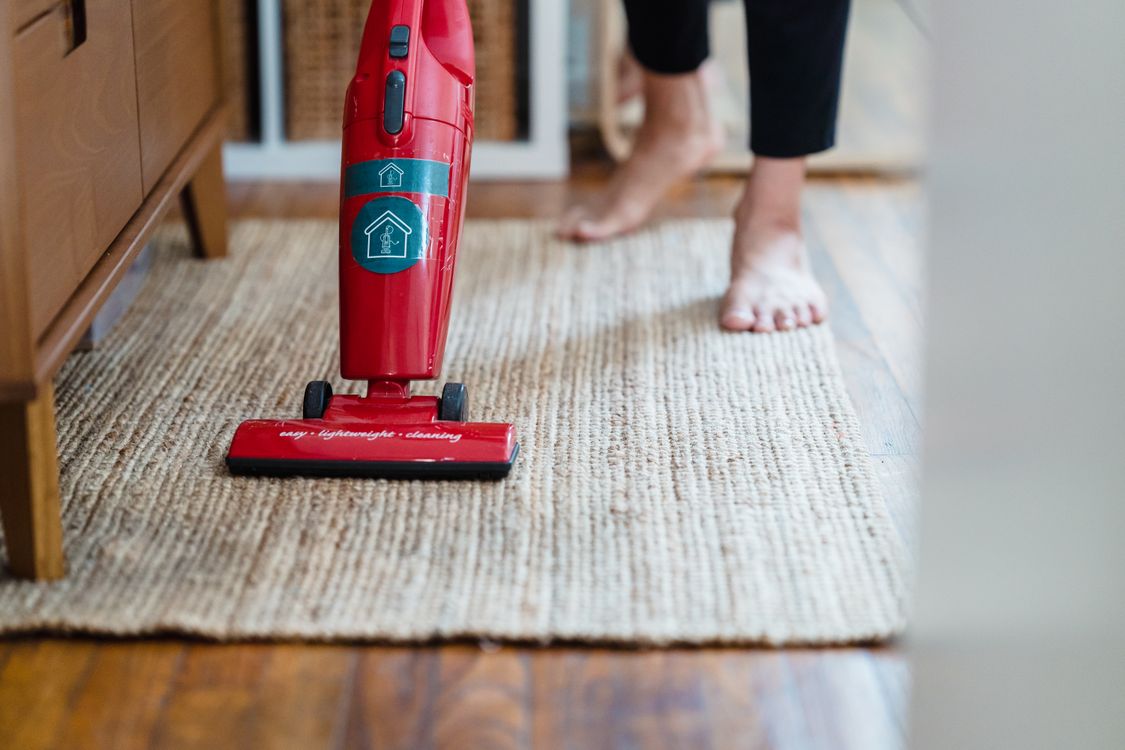
Most machine-washable rugs are relatively thin. That helps them fit into a washer and dry more quickly, but it produces a different experience from a dense wool rug. Furniture may feel less anchored, sound absorption may be lower, and the surface may not offer the plushness expected in a bedroom.
A compatible pad can add cushioning and reduce movement. Use the manufacturer's pad where a system requires it, or verify that a separate pad is suitable for both rug and floor. Some rubber-like materials can react with certain floor finishes or trap moisture.
Test door clearance. Even a thin rug can catch beneath an exterior or closet door when combined with a pad. Corners should lie flat, especially in busy pathways.
Washability does not guarantee stain removal
Different soils behave differently. Water-based spills, oil, pigments, pet urine, and dye transfer may require distinct treatment. Promptly blot according to the care instructions and remove solids without rubbing them deeper into the fibers.
Do not apply bleach, enzyme cleaners, solvents, or pre-treatments unless they are approved for the rug. A product that is safe for the face fiber may affect the printed color, backing, adhesive, or pad. Test an approved cleaner in an inconspicuous area.
Machine washing can remove general soil while leaving a set stain visible. It can also make one cleaned rug look brighter than adjacent textiles. “Washable” means the product can tolerate a specified washing process, not that every mark is reversible.
Drying is half the process
A wet rug is heavy and can develop odor if it dries slowly. Follow the specified drying method—air drying, tumble drying at a stated temperature, or a combination. High heat can shrink or distort synthetic backings even when the face fabric appears unaffected.
Plan where a large rug can dry flat or hang with adequate support and airflow. Avoid folding a damp rug over a narrow rail that may leave a crease. Do not return it to the floor or pad until all layers are dry.
If outdoor drying is permitted, strong sunlight may affect color and wind can damage or contaminate the textile. Secure it without stretching. In humid weather, a commercial dryer permitted by the instructions may be more reliable.
The pad needs its own care plan
In a two-piece system, spills can pass through the cover. Removing and washing only the visible layer may leave moisture or odor in the pad. Ask whether the pad can be rinsed, spot-cleaned, or machine washed and how long it takes to dry.
Vacuum beneath the pad periodically. Fine grit can migrate through a rug and scratch some flooring. Inspect for trapped moisture, discoloration, or deterioration, particularly near exterior doors and pet bowls.
Never place a damp pad back under a clean cover. If a recurring accident reaches the floor, address that source rather than relying on repeated full washing.
Print and texture deserve a close look
Many washable rugs achieve elaborate patterns through surface printing rather than colored yarn woven throughout. This can create crisp designs at a modest thickness, but the appearance may change when viewed from different angles or when the pile is brushed. Examine close photographs and, if possible, a sample.
Distressed patterns disguise small marks and alignment changes. Very pale solids can reveal traffic lanes, while dark smooth surfaces may show lint. A busy print hides debris but can also make it harder to spot small objects on the floor.
Edge finishing matters. Inspect binding, corners, and fringe. Decorative fringe can tangle in washing unless the care process accounts for it. Printed edges that reveal a white base when curled may be more noticeable than woven borders.
Where washable rugs make sense
They are well suited to small and medium areas where spills are predictable: breakfast nooks, nurseries, children's rooms, pet zones, laundry rooms, and entries. Runners and small rugs are easier to carry, wash, and dry than large room rugs.
They can also work under a dining table if the surface allows chairs to move comfortably and the rug is large enough for pulled-out chairs. Confirm that cleaning does not require moving an unmanageable table every few weeks.
For allergy management, regular cleaning may be useful, but a rug is only one part of indoor environmental control. Follow health advice appropriate to the household rather than assuming any textile is hypoallergenic.
Where another rug may be better
A formal living room may benefit more from the depth, repairability, and long service life of a quality wool rug. A very large washable rug can be so difficult to handle that it is effectively spot-cleaned like a conventional one. A high-moisture area may need a hard, cleanable surface rather than any textile.
Homes with robot vacuums should check edge thickness and manufacturer guidance. Lightweight corners can lift or fringe can tangle. Strong suction may distort a thin cover on its pad.
If the primary goal is softness and acoustic comfort, sample the washable option underfoot before replacing a thicker rug.
Calculate the ownership routine
Add the cost of the required pad, commercial laundry if needed, stain products, and possible replacement covers. Read the warranty for changes in texture, color, edge curl, and backing. Normal wear and cleaning mistakes are often excluded.
Consider the physical task. Can one person move the furniture, roll the rug, carry it, and reinstall it? A product is only practically washable if the household can complete the process safely.
Vacuum using the recommended setting between washes. Rotating the rug can distribute sunlight and traffic. Treating every small spill locally may extend the interval between full washes.
The verdict
Washable rugs are not a universal upgrade, but they solve a genuine problem in the right size and location. Choose one after matching the care instructions to your machine, drying space, floor, and tolerance for repositioning. The best use is often a runner or medium rug in a predictable mess zone—not the largest rug a company happens to sell.
Sources and further reading
- U.S. Environmental Protection Agency, moisture control and indoor air: https://www.epa.gov/mold/brief-guide-mold-moisture-and-your-home
- U.S. Consumer Product Safety Commission, home safety information: https://www.cpsc.gov/Safety-Education/Safety-Guides/Home