

A dining table is both a large piece of furniture and a working surface. It hosts meals, laptops, homework, parcels, celebrations, and the occasional repair project. Choosing one by seat count alone ignores the questions that decide whether it is pleasant to use: Can chairs pull out without hitting a wall? Do table legs interfere with knees? Can the finish tolerate the household's habits? Will an extension leaf ever be used if it is difficult to install?
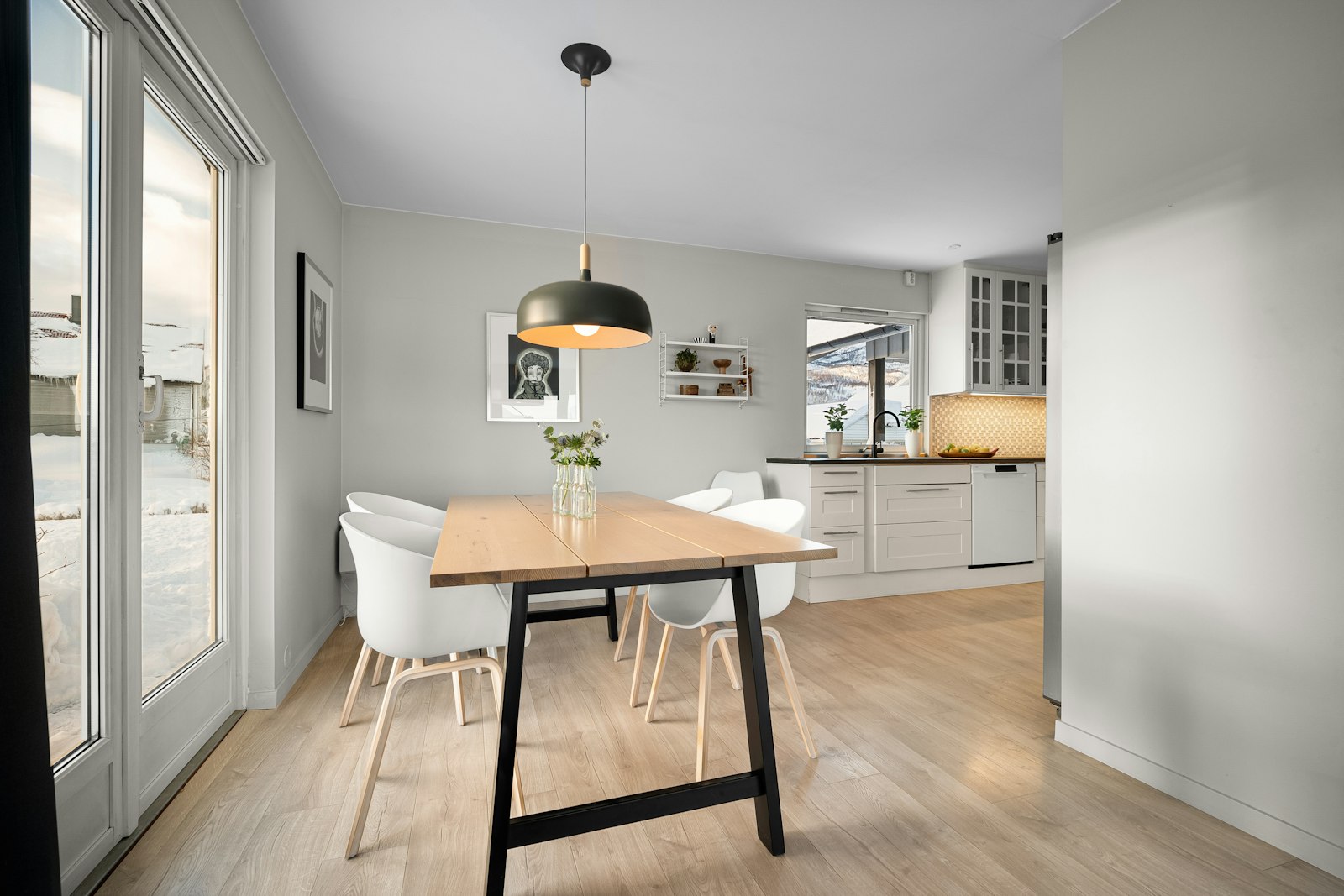
The right table begins with the room and daily routine, then earns its place through construction and care that fit those conditions.
Measure the usable zone
Record room length and width, then subtract the areas needed for door swings, cabinets, radiators, vents, and main traffic routes. Tape the table outline on the floor. Add chairs in their pulled-out position using more tape or real chairs from another room.
People need space to sit, rise, and pass behind occupied chairs. Exact clearances depend on the room and household, but a plan that works only when every chair is pushed in is not a practical plan. Test the tightest side physically. Carry a plate around the taped footprint and open nearby storage.
In an open-plan room, the table also needs visual breathing space. A rug can define the dining area, but it should be large enough that chair legs remain on it when pulled out. A small rug that catches the back legs is worse than no rug.
Translate seat count into real comfort
Retail seat counts assume a certain chair width and modest place setting. Measure the chairs you intend to use, including arms. Divide the available perimeter honestly and allow elbow room. A bench can fit more people occasionally but may require several diners to move when one person leaves.
Consider who sits where. A pedestal can improve legroom at a round table, while a broad trestle base may limit end seating. Thick aprons beneath the top reduce thigh clearance, especially with armchairs. Sit at the display table rather than inspecting it standing up.
If the table is used for work, depth matters. A narrow table supports intimate dining but may not hold two laptops and papers comfortably. An extremely wide table makes conversation and passing dishes less convenient.
Choose a shape that follows the room
Rectangular tables suit long rooms, offer predictable seating, and are widely available with extensions. They can create sharp corners in tight circulation. Rounded corners soften that risk without changing the basic shape.
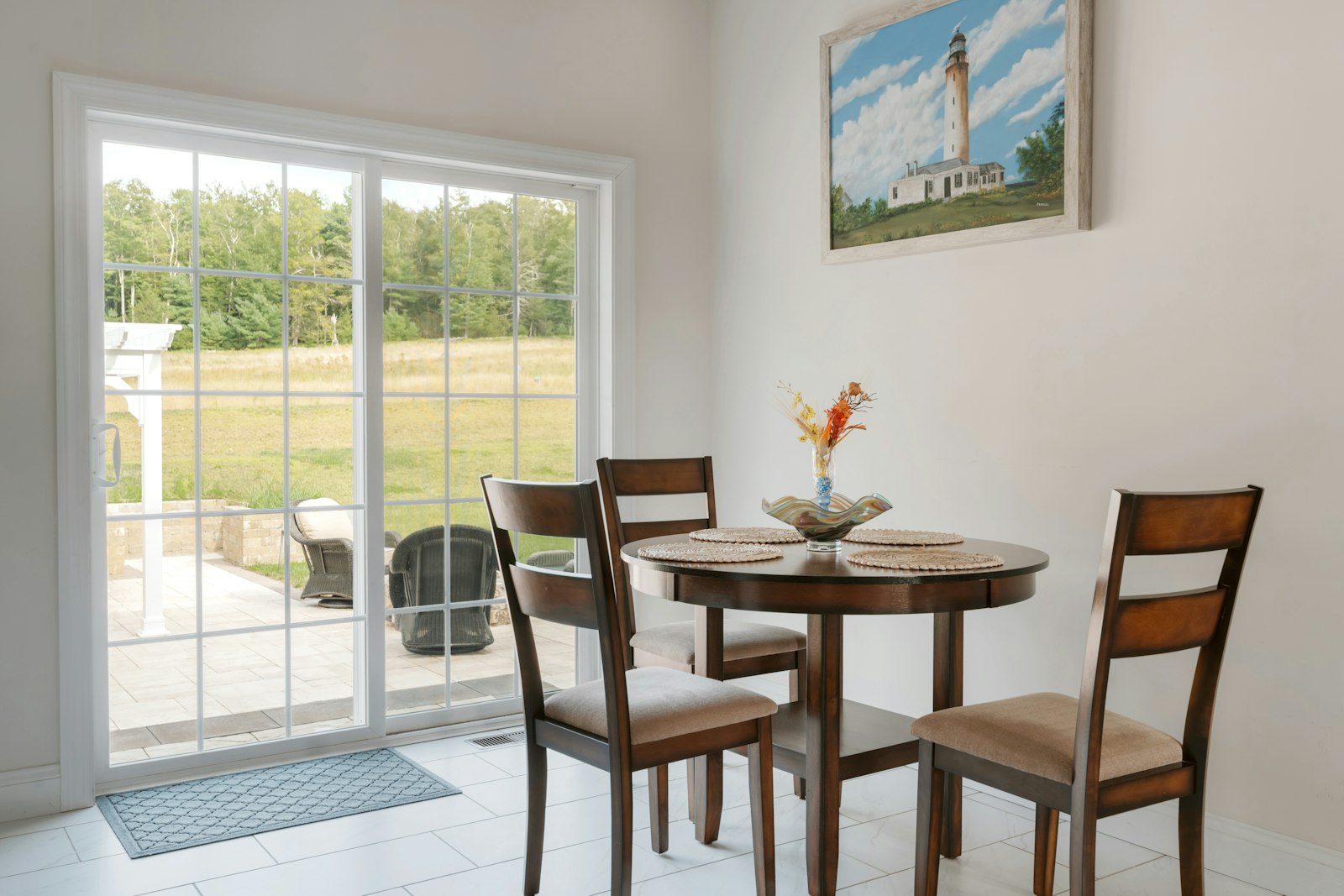
Round tables support conversation and remove corner seats. They work especially well in square rooms and breakfast areas. As diameter grows, however, the center becomes hard to reach and the table occupies substantial floor area. Large round tables are not automatically space savers.
Oval tables combine a long seating line with gentler circulation. Their curved ends may reduce useful place-setting width. Square tables feel balanced in square rooms but become unwieldy at larger sizes. Let the room shape and chair movement guide the decision rather than selecting a shape only for style.
Understand the base before admiring the top
Four corner legs are simple and stable when well joined, but they fix the usable seating positions. Check whether chairs can tuck between them. Splayed legs may consume more floor width than the top suggests.
Pedestal bases free the perimeter and can be excellent for round tables. Test for wobble by applying modest pressure at the edge of a floor model. A wide, heavy base improves stability but may occupy foot space. Double pedestals can support long tops while preserving end seating.
Trestle bases offer a strong visual line and often pair with benches. The horizontal stretcher can interfere with feet, and vertical supports may determine where chairs fit. Examine the exact base dimensions, not only the tabletop.
Compare materials by how they age
Solid wood can be durable and repairable. It also moves subtly with humidity and develops dents, color changes, and wear. Those marks may become patina or may feel like damage, depending on expectations. Species hardness offers some guidance, but finish and construction matter greatly.
Wood veneer can provide attractive, stable surfaces with efficient material use. A quality veneer is not fake wood; it is a thin layer of real wood over a substrate. It cannot be refinished as aggressively as a thick solid top, so avoid sanding without understanding the construction.
Laminate is easy to wipe and available in many finishes. Edge quality and resistance to heat or chipping vary. Stone and sintered surfaces feel substantial and tolerate some kinds of wear, but they are heavy, can chip at edges, and may require particular cleaners. Glass keeps sight lines open yet shows fingerprints and creates sound; tempered safety glass and stable support are essential.
Ask what the finish can tolerate
“Sealed” does not explain resistance to heat, water, alcohol, oil, or abrasion. Request written care instructions. Some wood finishes allow time to blot a spill; others show rings quickly. Stone may require sealing, while certain manufactured surfaces do not.
Use trivets, coasters, and placemats when the maker recommends them. Do not assume a commercial image of a hot serving dish proves heat resistance. Strong cleaners, abrasive pads, and excess water can damage finishes even when the underlying material is robust.
If children use the table for art, consider a removable protective cover or a finish that can be repaired. A pristine high-gloss surface may demand more vigilance than the household wants to provide.
Evaluate extension mechanisms carefully
Measure the table both closed and fully extended, then repeat the room-clearance exercise. Confirm how many people the extended arrangement can seat with the actual base and chair width. An extension is useful only if the room still functions.
Leaves may store inside the table, separately in a closet, or vertically in a provided bag. Self-storing leaves add weight and mechanical complexity but are convenient. Separate leaves need a dry, stable storage location to reduce warping or finish changes.
Operate the mechanism in the store if possible. One person should not be expected to handle a heavy leaf unless the design supports it. Check alignment at seams and whether locks or latches hold the sections together. Ask how replacement mechanisms are serviced.
Inspect construction and stability
Look beneath the top. Aprons should meet legs cleanly, fasteners should be accessible, and extension hardware should move without scraping. On wood tables, elongated screw holes or other methods may accommodate normal movement of a solid top; rigidly trapping wide boards can cause problems.
Press gently at corners to check rocking. A floor model may sit on an uneven floor, so identify whether adjustable glides are present. Glides protect flooring only when clean and compatible with the surface.
Review the stated load limit and assembly instructions. A heavy top may require two or more adults. Tighten hardware in the recommended sequence and recheck it after the first weeks of use.
Plan delivery before ordering
Measure exterior and interior doors, hall turns, stairs, and elevators. Ask for package dimensions and the size of the largest non-removable component. Round and stone tops can be particularly awkward even when their final footprint fits easily.
Clarify whether delivery includes assembly, placement, and packaging removal. Inspect the top, edges, and base before signing. Photograph damage and report it promptly under the retailer's policy.
Custom sizes and finishes are often final sale. Obtain a sample and written specification before committing. Wood samples are representative rather than identical because grain and color vary.
Balance daily needs and occasional crowds
Buy primarily for the people who use the table most days. An enormous table kept for two annual gatherings consumes space all year. A smaller extending table, an added folding table for special occasions, or serving some food from a sideboard may be the better compromise.
Consider the table's second job. If it is a daily desk, cable access and a forgiving surface matter. If it hosts craft projects, easy cleaning and good light are priorities. A formal dining room used occasionally can support a more delicate finish, but only if the household truly uses it that way.
Make the final choice slowly
Compare outer dimensions, apron height, base footprint, chair clearance, closed and extended capacity, surface construction, care instructions, delivery, warranty, and total price. Bring the dimensions home and leave the tape outline in place for a normal day.
A successful dining table does not merely fit the floor plan. It lets people sit without negotiating legs, survives the way the household eats and works, and remains comfortable when the chairs are pulled out. Choose the shape after measuring the room, the material after considering maintenance, and the size for everyday life rather than an imaginary permanent dinner party.
Sources and further reading
- U.S. Consumer Product Safety Commission, furniture safety: https://www.cpsc.gov/Safety-Education/Safety-Guides/Furniture-Furnishings-Decorations
- Federal Trade Commission, furniture warranty guidance: https://consumer.ftc.gov/articles/warranties