

Modular storage is sold as furniture that can change with a home. Add a shelf after the book collection grows, turn a low console into a taller unit, move the same components from an office to a living room, or take everything apart for the next address. That promise is appealing, particularly when conventional cabinets never seem to fit the second room as well as the first.
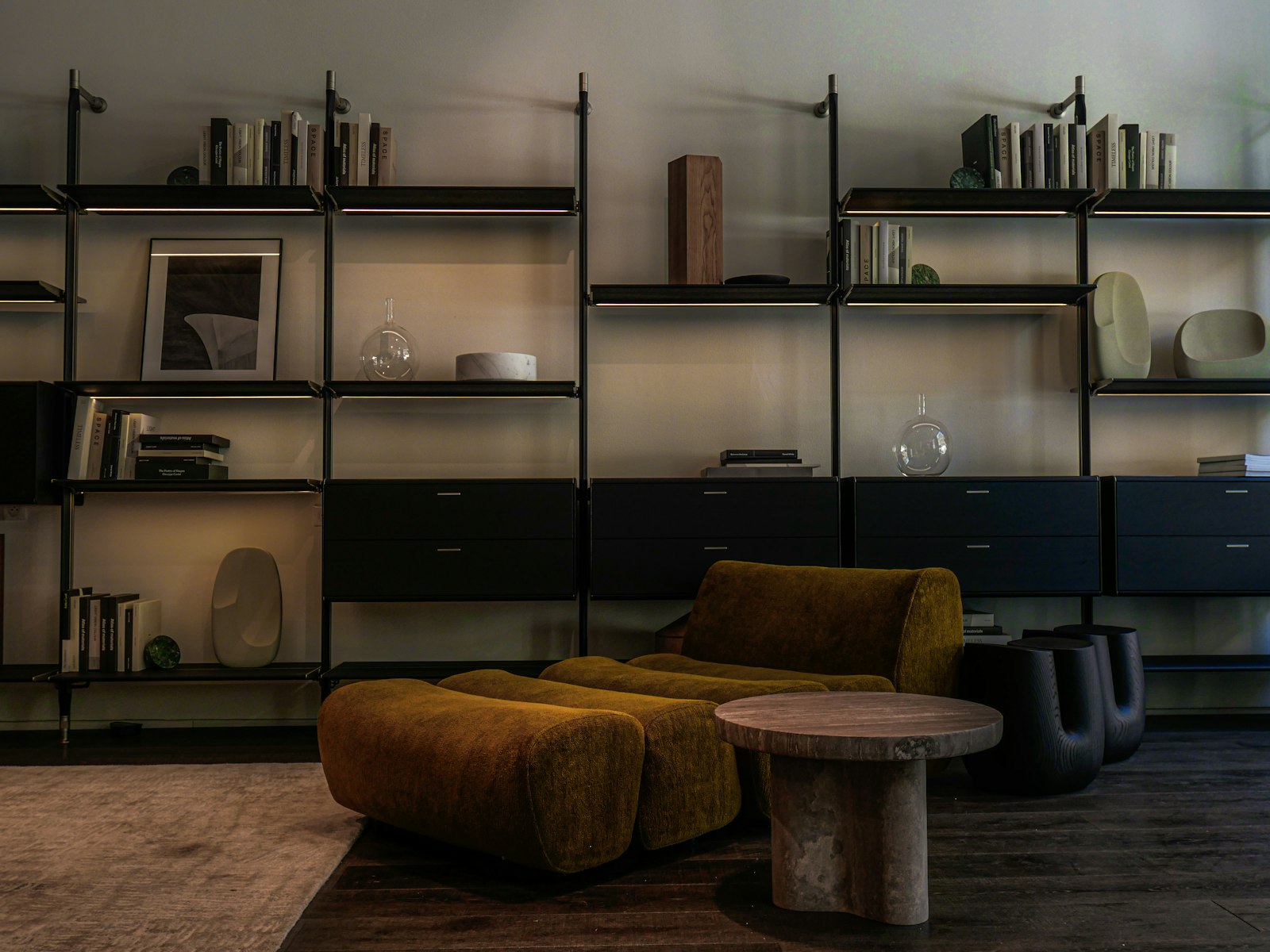
The flexibility is real in a well-supported system, but it is not automatic. Modules can be costly, proprietary hardware may disappear, and a configuration designed for one wall may prove surprisingly awkward elsewhere. The question is not whether modular storage is good or bad. It is whether the specific system remains useful after the first attractive installation.
What actually makes a system modular
A stack of matching cubes is not necessarily a durable modular system. The useful definition includes components with standardized dimensions and reliable connectors that allow several safe configurations. Shelves, uprights, cabinets, drawers, desks, or doors should be designed to work together rather than simply look related.
Ask how the units connect and which arrangements are approved. Some systems can grow horizontally but not vertically. Others require a wall rail for every configuration. A few allow freestanding room dividers, while similar-looking products become unstable away from a wall. Marketing photographs should never replace assembly instructions.
Look for a planning guide that gives maximum spans, loads, and compatible parts. If the only information is a collection of lifestyle images, it will be difficult to evaluate or expand the system responsibly.
Flexibility has several meanings
Reconfigurability is the ability to rearrange parts you already own. Expandability is the ability to buy more parts later. Portability is the ability to disassemble, move, and rebuild without damage. A system may perform well in one area and poorly in another.
Wall-rail shelving is highly adjustable within a given installation, but moving it requires filling holes and mounting rails again. Heavy cabinet modules may theoretically swap positions yet be unpleasant to lift. Particleboard panels assembled with cam fittings can survive careful disassembly, though repeated cycles may loosen the connections.
Decide which kind of flexibility matters. A homeowner refining one room over ten years needs dependable expansion. A renter moving every two years may value compact packaging and forgiving hardware more than an enormous catalog.
Measure the objects, not just the wall
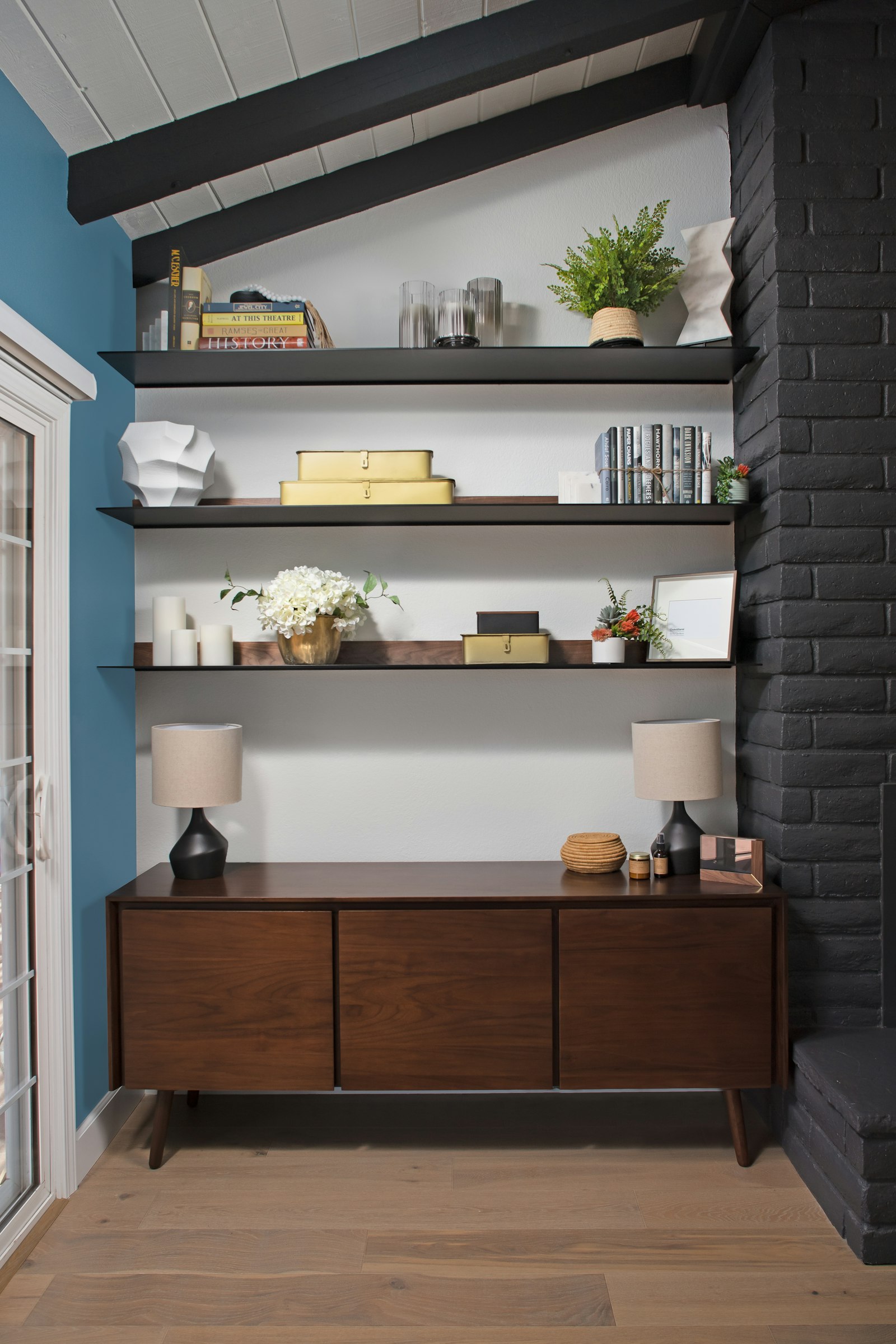
Begin with an inventory of what must be stored. Measure the tallest books, widest record sleeves, printer depth, basket height, and cable plugs. Count closed items that should be hidden and open items worth displaying. A beautiful shallow system is useless if binders protrude or cabinet doors cannot close around equipment.
Then measure wall width and height, baseboard projection, outlets, switches, vents, and any slope in the floor or ceiling. Mark the proposed elevation with painter's tape. Include the open sweep of doors and drawers, not only the closed footprint.
Modular grids can waste space at the edges because components come in fixed increments. A 24-inch bay may leave an unusable strip on a 29-inch wall. Custom cabinetry fits irregular spaces better, while ordinary standalone furniture may offer a more efficient size without custom cost.
Stability is not optional
Tall storage can tip when drawers are opened, children climb, or weight is placed high. Follow the maker's anchoring instructions and use fasteners appropriate to the wall. Anti-tip hardware supplied with the unit is part of the installation, not an optional accessory.
For rail systems, locate suitable structural support and observe specified fastener spacing. Drywall anchors have load limits and depend on correct installation. Electrical wiring and plumbing may be hidden in the wall; if the route is uncertain, seek qualified help before drilling.
Freestanding stacked units need approved connectors between modules. A broad-looking base does not guarantee stability. Place heavier items low and respect load ratings for shelves, connectors, and the complete arrangement.
Material choices affect repeated assembly
Steel uprights and brackets often tolerate adjustment well, though paint can chip and metal components may make sound when loaded. Solid wood can be repaired, but dimensional movement and drilling accuracy matter. Plywood offers useful strength relative to thickness. Engineered boards vary greatly in density, finish, and edge durability.
Inspect connection points. Threaded metal inserts are generally more reassuring for repeat assembly than screws driven directly into the same board each time. Cam-and-dowel fittings can create a clean exterior but should align easily; forcing them damages the panel.
Finish quality matters at edges, where moisture and impacts are most likely. Request a sample if color matching matters. “Walnut” may describe a print, stain, veneer, or solid species, each with different repair possibilities and price.
Closed storage changes the budget
Open shelves are usually the least expensive part of a system. Drawers, doors, backs, lighting, cable management, and special inserts raise the total quickly. Price the intended finished configuration rather than comparing a starter bay with a complete conventional cabinet.
Include wall mounting, delivery, assembly, extra shelves, and the containers needed to use open sections. Some systems require proprietary feet, end panels, or trim to look finished. A sale price on the frame can be misleading if essential accessories remain full price.
Closed cabinets also change weight and stability. Confirm that a wall rail or base is rated for the loaded components, not merely empty display pieces.
The catalog may not last forever
Long-term expansion depends on the manufacturer continuing the line without changing dimensions or finishes. No company can promise permanence, but there are clues. Established systems with published part numbers, replacement hardware, downloadable manuals, and a market for used components are easier to maintain.
Ask whether hinges, shelf pins, connectors, and wall brackets can be purchased separately. Save the manual, order number, finish name, and a few spare small parts. If the design uses a unique connector, buying an extra set can be sensible.
Color consistency is another limitation. Wood and paint change with light and age, and later batches may not match exactly. A deliberate two-tone expansion can look better than an almost-but-not-quite match.
Moving can reveal the compromise
Before buying, download the assembly guide and imagine reversing every step. Can large panels turn in a stairwell? Are components light enough for two people? Does disassembly require removing glued pieces or nailed backs? Will hundreds of small fittings be identifiable later?
Label parts discreetly during the first assembly and keep hardware by module in separate bags. Protect finished edges during transport. Never drag a loaded unit; empty it and follow the maker's moving guidance.
At the new home, reassess the layout and anchoring rather than rebuilding automatically. Different walls, floors, and room use may make the previous configuration unsafe.
Visual flexibility is limited too
A strong grid creates order, but it can dominate a room. Repeating vertical rails or cube divisions may feel architectural in a modern interior and busy in a room with ornate trim. Closed doors calm the grid; varied objects and empty space keep open shelves from resembling inventory.
Consider how the system looks partially filled. Storage needs fluctuate, and a unit should not depend on perfect styling. Neutral finishes are easier to relocate, while a distinctive color can make an inexpensive system feel intentional if it suits several possible rooms.
Cable access deserves attention in media and office applications. An open back hides little. Purpose-made grommets, ventilated doors, and a clear route to outlets may be worth more than another display shelf.
When modular storage is a strong choice
It works well for collections that change gradually, rooms with a long uninterrupted wall, home offices needing mixed open and closed components, and households willing to maintain one product ecosystem. It can also bridge the gap between low-cost standalone shelving and full custom cabinetry.
It is less persuasive for a one-time awkward niche, a room that needs maximum storage in every inch, extremely heavy collections without suitable structural support, or a buyer who dislikes visible grids and ongoing decisions. A well-sized cabinet may be simpler and cheaper.
Secondhand modular components can offer value, but verify compatibility and inspect every connector. Missing proprietary hardware can turn a bargain into unusable panels.
A fair verdict
Modular storage earns its premium when the connections are robust, essential parts remain available, and the system can serve more than one believable future layout. It becomes an expensive compromise when “flexible” means buying many accessories to correct a poor initial fit.
Plan the complete configuration, read the technical documents, price the doors and drawers, and think through the next move. The best modular system is not the one with the largest catalog. It is the one whose basic parts are stable, understandable, repairable, and useful even when the room changes.
Sources and further reading
- U.S. Consumer Product Safety Commission, Anchor It: https://www.anchorit.gov/
- Federal Trade Commission, warranty guidance: https://consumer.ftc.gov/articles/warranties