

A living room can feel cold even when the thermostat says otherwise. The cause is often visual and tactile: one bright ceiling light, a rug that is too small, uncovered windows, hard surfaces, or furniture pushed so far apart that conversation feels formal. None of those problems requires a new sofa.
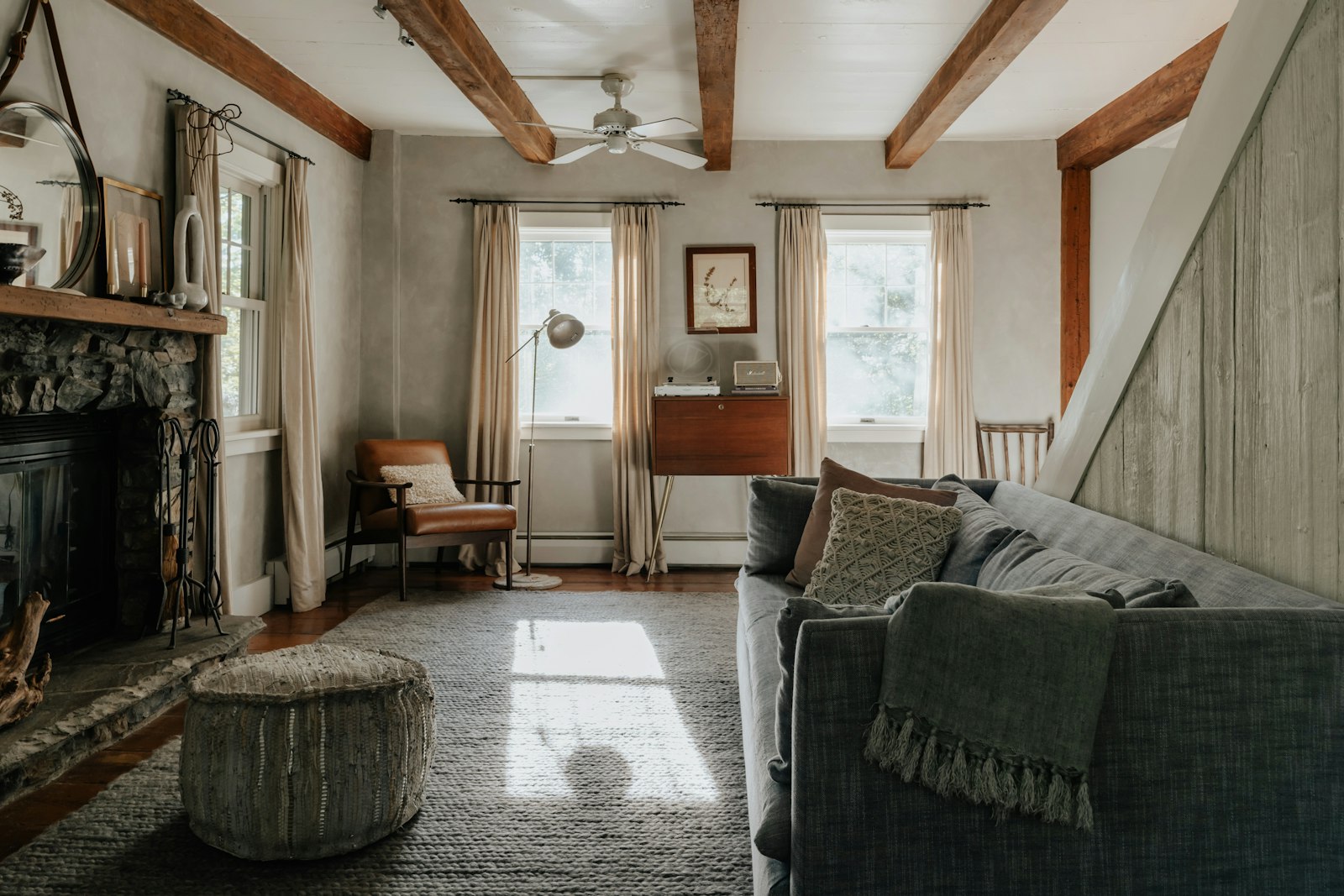
The most convincing warm rooms are built in layers. Light appears at different heights, fabrics soften sound, colors repeat quietly, and chairs face one another closely enough to feel connected. This makeover works with the furniture already in the room and concentrates spending where it changes the experience most.
Begin with an honest room edit
Take photographs in daylight and after dark. Pictures make gaps, clutter, and scale problems easier to notice. Remove objects that are broken, no longer used, or simply parked in the room. Clear every flat surface, then return only what contributes to a task or the overall composition.
This is not an argument for a bare room. Warmth needs personal objects, but they are more effective when grouped deliberately. A crowded mantel and an empty coffee table can both feel unresolved. Keep a box nearby for pieces that may return after the larger layout is settled.
Clean lampshades, windows, baseboards, and upholstery according to their care instructions. Dust absorbs light, and a wrinkled throw or flattened cushion can make a room look neglected rather than relaxed. Tighten loose furniture legs and repair small faults before buying decoration.
Pull the seating into a conversation
Furniture lined against four walls often leaves an empty center and makes people speak across a distance. If circulation permits, bring the sofa and chairs closer together. Aim the front legs toward the rug or place at least the front feet on it. A coffee table should be reachable without becoming an obstacle.
Preserve a clear route through the room. The main path should not cut between a television and the sofa or force people around a sharp table corner. Use painter's tape to test new footprints before lifting heavy furniture, and ask for help when moving large pieces.
The television need not be the only focal point. Turn a chair slightly toward the sofa, add a lamp beside it, and the room gains a second purpose for reading or conversation. If a fireplace is present, arrange the seating so it can be acknowledged without creating two competing rows.
Replace one harsh light with layers
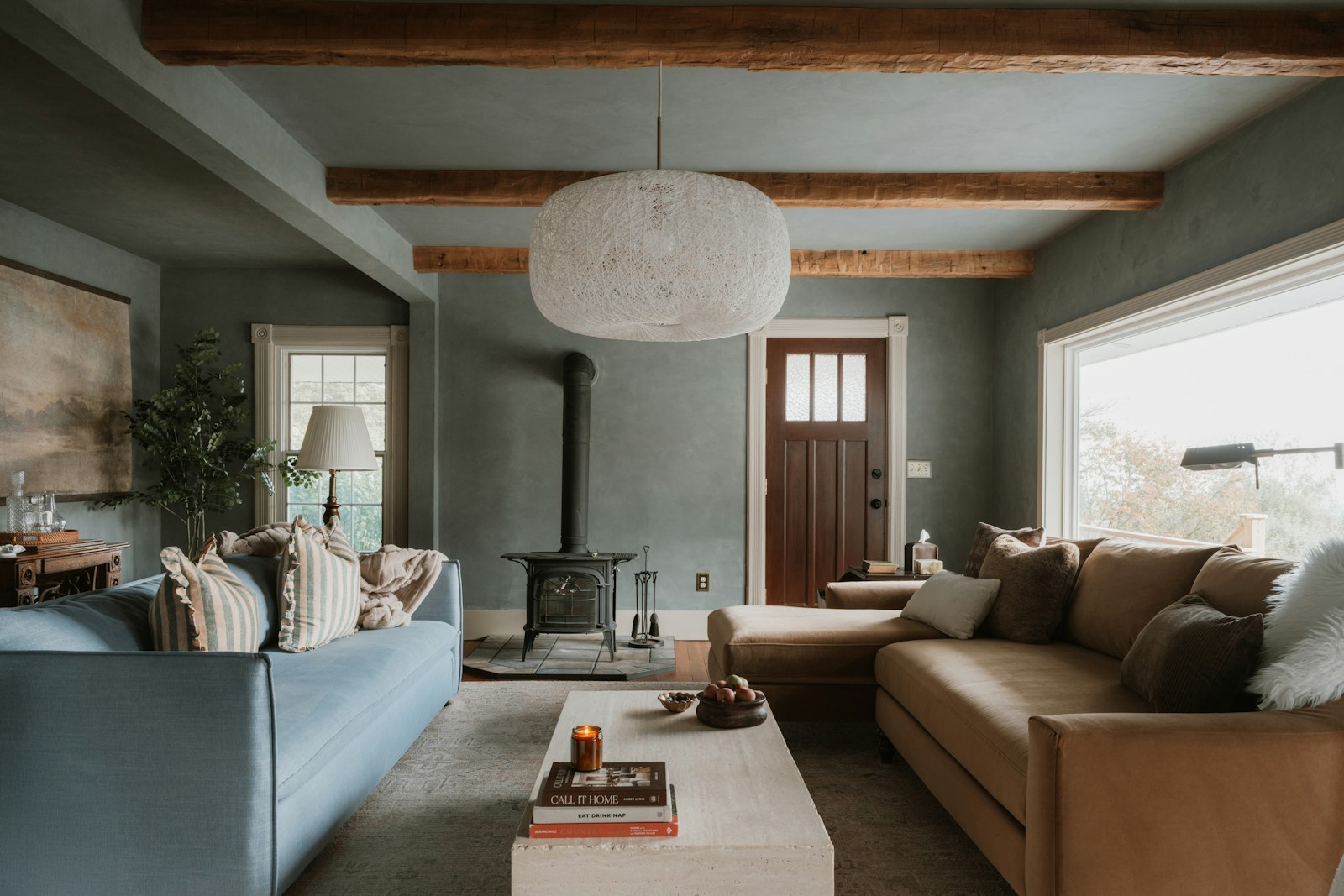
A ceiling fixture is useful for cleaning, but it rarely creates a comfortable evening by itself. Add light at two or three heights: a floor lamp near seating, a table lamp on a console, and perhaps a small light on a shelf. Pools of light make a room feel contained and give each activity a place.
Use bulbs with compatible color appearance so one corner does not look blue while another looks orange. Warm-white light is a common choice for living rooms, though wall color and personal preference affect the result. Check the fixture's maximum wattage and use only bulbs with the correct base and enclosed-fixture rating where required.
Position lamps to prevent glare on screens and exposed bulbs at eye level. A dimmer can be useful when it is compatible with the fixture and bulb. Electrical work beyond replacing a bulb or plug-in lamp should be handled appropriately for local rules and your skill level.
Correct the rug before adding accessories
A small rug floating beneath only the coffee table can make the entire seating group appear disconnected. Where possible, choose a rug large enough for the front legs of the main seats to rest on it. In a compact room, an almost room-size rug can create a calmer foundation than several little mats.
If a larger rug is not in the budget, experiment with rotating the current one or relocating it to a smaller area where its scale makes sense. A neutral flatweave can sometimes be layered beneath a smaller patterned rug, provided both lie securely and do not create a trip edge.
Use an appropriate rug pad to reduce slipping and protect the floor. Confirm that the pad material is suitable for the finish beneath it. At doors and transitions, check clearance carefully.
Add textiles with different jobs
Warmth does not require covering every surface in faux fur. Combine a few purposeful textures: linen-look curtains, a woven throw, velvet or wool-blend cushions, and a rug with visible fiber. Variation matters more than quantity.
Start with the sofa's existing color. Choose one related neutral, one deeper anchor color, and a small accent drawn from art or a rug. Repeat each at least twice so the choices look connected. Cushion inserts should fill their covers properly; underfilled cushions collapse, while overstuffed ones can strain seams.
Curtains soften the wall and reduce visual echo. Hang them high enough to give the window presence and wide enough that the glass is not covered when open. Before buying, measure from the planned rod position to the desired hem. Keep fabric clear of heaters and follow fire-safety guidance around heat sources.
Use color in larger, quieter areas
Warm rooms are not limited to beige. Clay, olive, tobacco, rust, muted blue, plum, and warm gray can all create depth. What matters is undertone and repetition. A single orange cushion in an otherwise cool gray room may look accidental; a rust thread in the rug, a book spine, and a small ceramic piece make it belong.
Paint is powerful but not always necessary. If the walls are serviceable, introduce color through one large artwork, full-length curtains, or a substantial throw. These changes are reversible and easier to judge. If repainting, sample the color on more than one wall and observe it morning and evening before deciding.
Very bright white trim beside warm walls can make the contrast sharper than expected. Sometimes the simplest improvement is replacing a cool bulb or cleaning a yellowed lampshade rather than changing the paint.
Bring in wood and other natural surfaces
Natural materials add visual temperature because their grain and irregularity contrast with smooth screens and painted surfaces. The room may already contain them. Uncover part of a wood table, group books in a basket, or display a stoneware bowl rather than purchasing a coordinated set of rustic accessories.
Wood finishes do not need to match. Two or three tones can coexist when one repeats elsewhere and the undertones are compatible. If every piece is a different orange-brown, the room may feel busy; a dark frame or black metal lamp can provide a useful boundary.
Plants add life where conditions suit them. Select according to available light and household safety, especially around pets and children. A healthy modest plant looks warmer than a large specimen struggling in a dark corner.
Give personal objects room to speak
Family photographs, travel finds, inherited pieces, and well-read books make a room specific. Avoid distributing them one by one across every surface. A small collection has greater presence when gathered on a tray, shelf, or side table with varied heights.
Frame styles can differ if the arrangement shares a common element, such as mat color or finish. On shelves, leave some open area around meaningful pieces. The object should be visible before the storage system.
Edit seasonal decoration rather than adding it on top of the permanent room. A winter throw can replace a lighter one; it does not need to join six existing blankets.
Spend in the right order
Complete the no-cost work first: clean, edit, rotate furniture, move lamps from other rooms, and regroup art. Then address the biggest scale problem, often the rug or curtains. Lighting comes next because it changes every color and surface after dark. Cushions and decorative pieces should be last.
Keep receipts until each item has been viewed in the actual room. Online photographs and showroom lighting distort color. One well-scaled secondhand lamp or properly sized curtain can outperform a cart full of small accessories.
Judge the room at 8 p.m.
The final test is not a daytime photograph. Sit where you normally sit on a typical evening. Is there enough light to read? Can everyone put down a drink? Are blankets accessible without becoming a pile? Does the room support conversation as well as the screen?
A warmer living room should feel easier, not merely fuller. When the layout connects people, lighting is gentle but useful, and textiles soften the largest hard areas, existing furniture often looks better than it did before. The transformation comes from relationships between pieces, not from replacing them.
Sources and further reading
- U.S. Department of Energy, lighting choices: https://www.energy.gov/sites/default/files/2021-08/ES-EE%20Lighting_080921_0.pdf
- U.S. Consumer Product Safety Commission, product and home safety: https://www.cpsc.gov/Safety-Education