

“Performance fabric” sounds reassuring on a furniture tag. It suggests that coffee will bead neatly on the surface, muddy paw marks will wipe away, and the sofa will still look presentable after years of ordinary life. Sometimes the fabric delivers on that promise. Sometimes the term is doing more work than the textile.
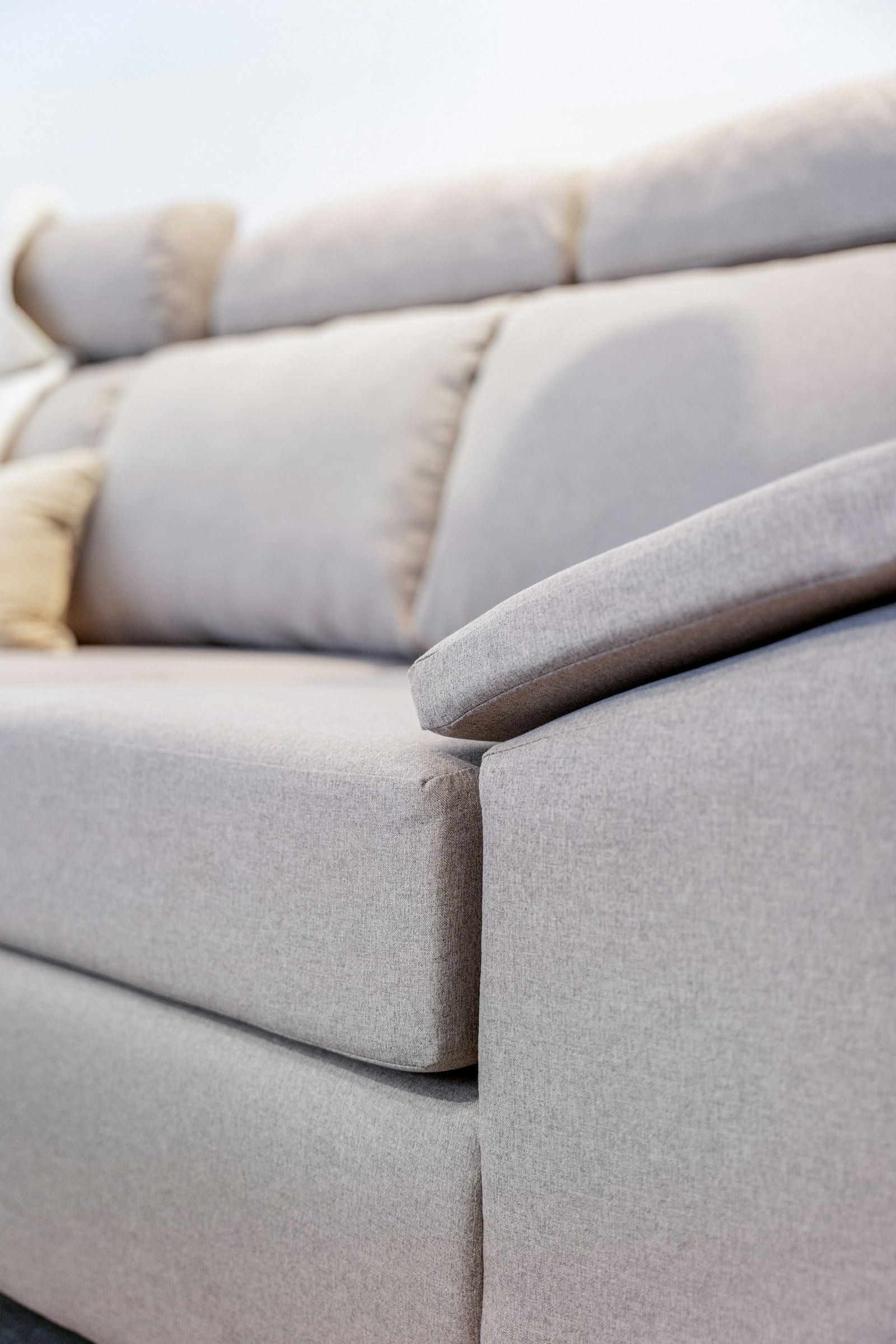
There is no single recipe that turns upholstery into performance fabric. Manufacturers may use the phrase for tightly woven fibers, solution-dyed yarns, a stain-resistant finish, an indoor-outdoor textile, or a combination of methods. That variety is not automatically a problem, but it means shoppers need more specific information than the headline provides.
Performance against what?
Start by asking the retailer to define the claim. A textile may perform well against abrasion but absorb a spilled drink. Another may resist water-based stains yet fade beside a sunny window. A third may be easy to clean but feel stiff against bare skin.
The qualities most relevant to upholstery include abrasion resistance, pilling resistance, colorfastness, resistance to staining, cleanability, and strength at seams. Households prioritize them differently. Pet owners may care about snagging and hair removal. A sunny room needs color stability. A sofa used for meals needs an appropriate cleaning method and some resistance to both water- and oil-based soils.
Marketing copy often combines these separate properties into one general promise. Ask for the fabric specification sheet, not just the collection name. It may identify fiber content, test results, recommended cleaning agents, and the exact finish used.
Fiber content is the beginning, not the verdict
Polyester is common in performance upholstery because it can be durable, colorfast, and relatively easy to maintain. Olefin, also called polypropylene, is often used where moisture and fading matter. Acrylic can imitate the hand of natural fibers while providing useful weather resistance. Nylon contributes strength but is less common as the sole face fiber for residential upholstery.
Natural fibers can appear in performance lines too. Cotton and linen blends may be treated for easier cleaning or woven densely for durability. They can offer a comfortable, familiar hand, although the finish and blend determine how they behave. Fiber name alone does not predict the result. Yarn type, weave, backing, dye method, and treatment all matter.
Solution-dyed synthetic fibers receive color as the fiber is made rather than only at the finished-fabric stage. Because the color runs through the material, these textiles are often chosen for resistance to fading and aggressive cleaning. That does not mean every solution-dyed fabric is immune to discoloration, and the furniture maker's care instructions still apply.
Stain resistance is not stain proofing

Some fabrics repel liquid long enough to blot a spill before it penetrates. Others are designed so stains release more readily during cleaning. Those are different advantages. A video showing water rolling off a sample does not demonstrate what will happen with skin oil, tomato sauce, sunscreen, ink, or dye transferred from dark denim.
Request a sample large enough to handle. If the retailer permits it, test a small hidden area with substances that resemble realistic risks in your home, then clean exactly as directed. Do not improvise with bleach, solvent, or a steam cleaner simply because a fabric is called high performance. The wrong product can set a stain, create a ring, strip a topical treatment, or damage the cushion beneath.
Prompt blotting remains important. Repellency can buy time; it does not remove the need to act. Rubbed spills may spread farther into the weave, so most care guides recommend lifting solids gently and blotting from the outside of a mark toward the center.
Read the cleaning code
Upholstery commonly carries a cleaning code. “W” generally indicates a water-based upholstery cleaner, “S” a solvent-based cleaner, “W/S” either type, and “X” vacuuming or professional attention rather than liquid spot cleaning. The exact label and manufacturer's instructions take priority over general definitions.
The code describes an accepted cleaning category, not a promise that every stain will disappear. It also does not mean the entire cushion cover can be placed in a washing machine. Even a removable zippered cover may require in-place spot cleaning or professional service. Washing can shrink the cover, disturb a backing, or create a different color from the rest of the sofa.
Find the permanent law and care labels before purchase if possible. Save a photograph of them, along with the order and fabric name, because a showroom swatch collection can change long before the sofa needs serious cleaning.
Durability numbers need context
Retailers sometimes quote results from abrasion tests, often expressed as cycles or double rubs. A higher figure can be useful when comparing fabrics tested under the same method, but it is not a countdown to failure and should not be treated as the only quality measure. Laboratory abrasion does not capture every household condition, such as claw snags, seam stress, sunlight, body oils, or repeated cleaning.
More is not always necessary. A fabric that greatly exceeds typical residential needs may bring compromises in texture, cost, or environmental impact. Ask whether the quoted test is intended for residential or contract use and whether other results—pilling and seam slippage, for example—are available.
Examine the weave yourself. Run a fingernail lightly across the sample to identify loose loops. Bend it to see whether the backing becomes obvious. Rub two parts together and see whether the surface begins to fuzz. These informal checks do not replace laboratory tests, but they reveal characteristics that matter in your own home.
Consider the finish and what happens over time
Some stain resistance is inherent to the fiber or dye process; some comes from a treatment applied to the finished fabric. Ask which is being used and whether performance changes after cleaning or years of abrasion. If chemical composition matters to your household, request current documentation rather than relying on broad claims such as “eco-friendly,” “non-toxic,” or “family safe.”
Third-party programs can provide useful information when the certification and product scope are clearly identified. Confirm that the certificate applies to the exact fabric, not merely to one supplier or component. A certification may address a limited set of emissions or substances and does not necessarily evaluate durability, recyclability, or every possible health outcome.
Ventilate a room when new upholstered furniture arrives, particularly if anyone is sensitive to odors. Odor alone is not a reliable measurement of emissions, but fresh air is a simple practical step.
Pets change the calculation
For shedding animals, a medium tone and subtle texture can disguise hair between cleanings. A tightly woven surface is usually easier to vacuum than deep bouclé or loose basket weave. Clawing is more complicated: no conventional upholstery should be sold as scratch proof, and a determined cat can damage even robust fabric.
Bring home samples and see how hair releases from them with the tool you actually use. Check whether the texture catches claws during ordinary movement. A washable throw on the favorite sleeping section may preserve the sofa better than paying for the most aggressively marketed textile.
Removable seat and back cushions are valuable because they can be rotated. Confirm whether both sides use the selected fabric; some cushions have a different material underneath and cannot be flipped.
Comfort and appearance still count
Technical performance is not useful if you dislike touching the sofa. Some treated textiles have a dry or slightly coated hand, while others are nearly indistinguishable from conventional indoor fabrics. Sit against the material with bare forearms. Look at it in side light, which reveals sheen and crushing. Dark, smooth fabrics may show lint; pale textured fabrics may conceal it.
The sample is only one part of the finished sofa. Cushion fill and tailoring affect how the textile looks after use. A rigid, tightly pulled fabric can emphasize wrinkles in a relaxed cushion, while a very stretchy fabric may creep at seams. Look at a floor model that has been sat on rather than judging only a pristine catalog image.
Is the upgrade worthwhile?
Performance upholstery is easiest to justify when the risk is clear: frequent entertaining, children, pets, a high-use family room, a short-term rental, or furniture near a bright window. In a lightly used formal room, a less expensive conventional textile may be entirely adequate. The upgrade should solve a problem you actually have.
Compare total price, warranty language, cleaning restrictions, and replacement options. Does the warranty cover stains or merely manufacturing defects? Must a professional cleaning service be used? Can individual cushion covers be ordered? Are accidental spills excluded? Get the answer in writing.
A sensible buying checklist
Before ordering a performance fabric sofa, record the exact textile name and color, fiber content, cleaning code, abrasion and pilling information, stain technology, sunlight guidance, warranty, and approved cleaners. Take the sample home. Place it beside flooring and curtains at several times of day. If possible, perform a small care test.
The phrase “performance fabric” is a reason to ask better questions, not a reason to stop asking them. A well-chosen textile can reduce anxiety and make a busy sofa easier to live with. The strongest choice is the one whose documented strengths match your household, whose care routine you will follow, and whose texture you still enjoy when there is no spill in sight.
Sources and further reading
- Federal Trade Commission, environmental marketing guidance: https://www.ftc.gov/business-guidance/resources/environmental-claims-summary-green-guides
- U.S. Environmental Protection Agency, indoor air quality and furnishings: https://www.epa.gov/indoor-air-quality-iaq